
DOGS...BEES... AND MOMENTS OF JOY!
JANUARY THOUGHTS
January arrived quietly, yet the world didn’t. Headlines, images, opinions — all tumbling over one another before the year had barely got off the ground. Like many, I suspect, I felt my thoughts begin to race.
Usually, I try to rein them in. This time, I didn’t. I gave them space and listened. Sometimes those thoughts were prompted by something I’d seen online, sometimes by a headline drifting past, but mostly they circled around the same thing — our world, and what we are doing to it.
We pollute the earth, the sky, and the sea. We take more than we need, push further than we should, and rarely stop to ask when enough might finally be enough. Progress, we’re told, makes life easier — and perhaps it does — but I often wonder at what cost, and for whom.
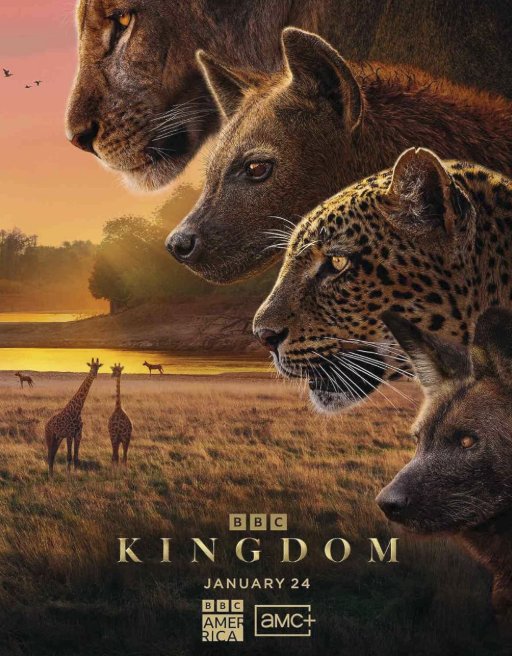
Animals take what they need and no more. They defend territory, they hunt to feed their families, and then they settle. There is balance there. No greed. No excess. Just life, playing out as it should. If you don’t believe me, watch David Attenborough’s Kingdom.
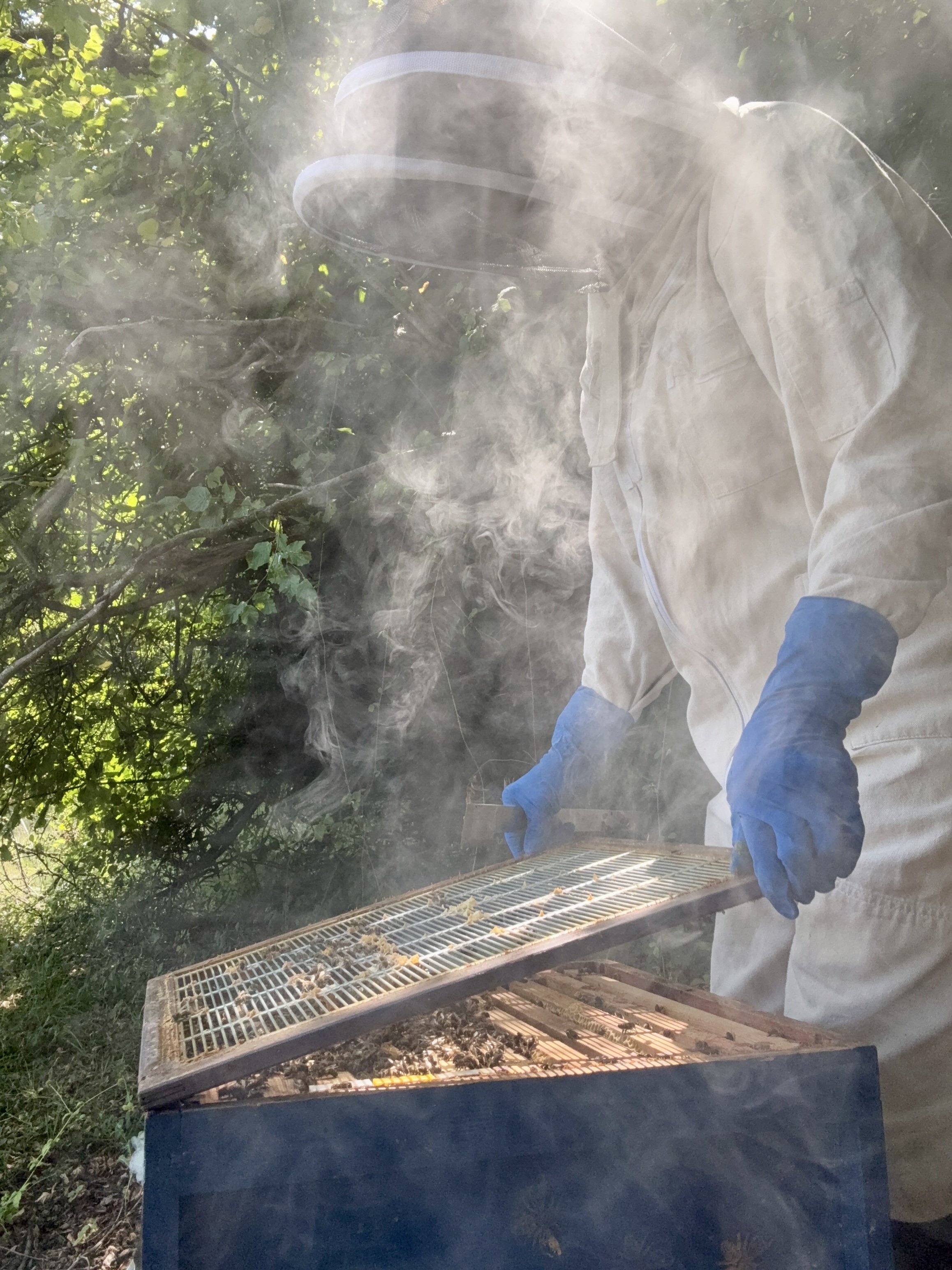
And it was this thought —how nature works and how we interfere — that led my mind back to the honeybees. Because the greatest threat facing them today, the scourge of the honeybee world, is not something they created themselves. It is something we introduced.
Varroa. And, as promised at the end of last year, I said I would talk about varroa in this blog.
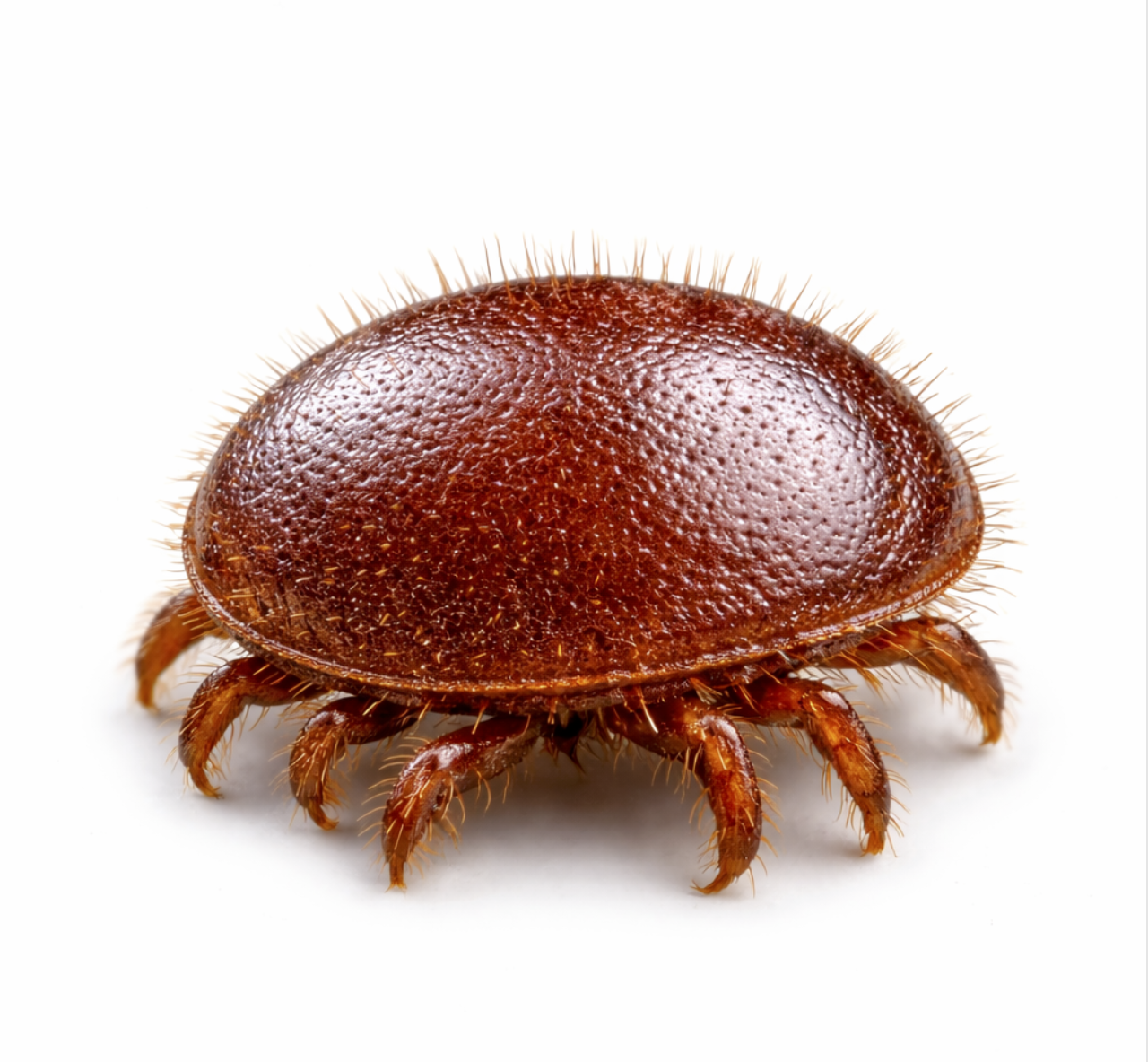
Varroa: A Lesson in Interference
Varroa destructor is a tiny parasitic mite, barely visible to the naked eye, yet it has become one of the greatest threats to honeybees worldwide. It weakens colonies, spreads disease, and if left untreated, will almost certainly lead to their collapse. What matters most, though, is this:
Varroa did not evolve alongside our European honeybees. It was spread through human movement — through trade, transport, and our desire to manage, move, and control bees to suit our needs.
Left alone, nature finds balance. When we intervene without fully understanding the consequences, imbalance follows.
Beekeepers now spend a great deal of time trying to correct a problem that was never the bees’ doing. Careful monitoring, treatment, and responsibility are essential — because without them, colonies suffer. The bees now rely on us to act thoughtfully, not greedily, and not carelessly.
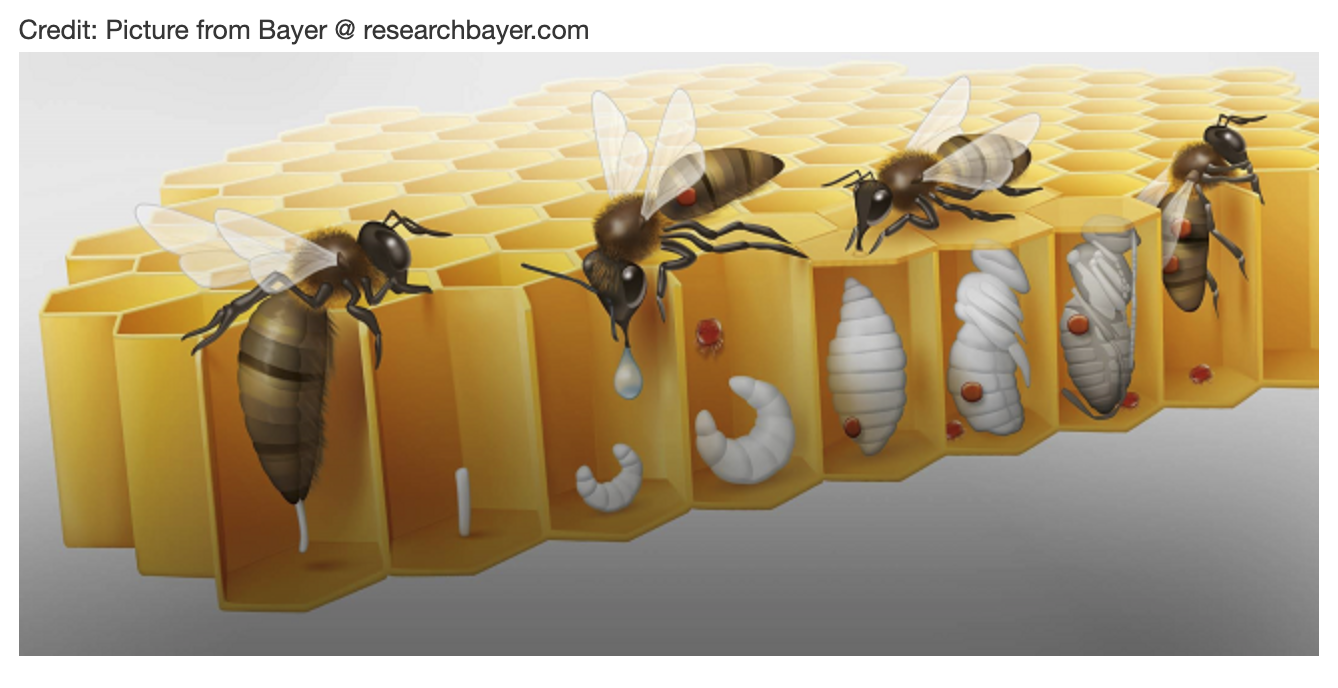
© U S Department of Agriculture
How Varroa Takes Hold
Varroa enters a hive quietly. It arrives attached to a bee — often drifting in from another colony, or carried home unknowingly by a forager. Once inside, it becomes almost invisible, hiding between the bee’s body segments, feeding on its fat reserves and weakening it over time.
The real damage begins when varroa reproduces.
The mite slips into a brood cell just before it is sealed with wax, choosing developing bee larvae as the perfect nursery. Hidden from view, the varroa lays its eggs. As the young bee grows, so do the mites. By the time the bee emerges, several new varroa mites emerge with it — ready to repeat the cycle.
Bees cannot keep pace with this rate of reproduction. What begins as a small, unseen problem can very quickly become overwhelming— sound familiar huh? — Alongside weakening individual bees, varroa also spreads viruses through the colony, leaving bees vulnerable to collapse, particularly as winter approaches.
This is why monitoring is so important.
Beekeepers regularly check varroa levels using a variety of methods — not because we want to interfere, but because we have a responsibility to lessen a problem we helped create. Timely treatment, careful observation, and restraint are essential. Too little action risks the colony’s survival; too much, or careless treatment, risks further harm. It is a delicate balance.
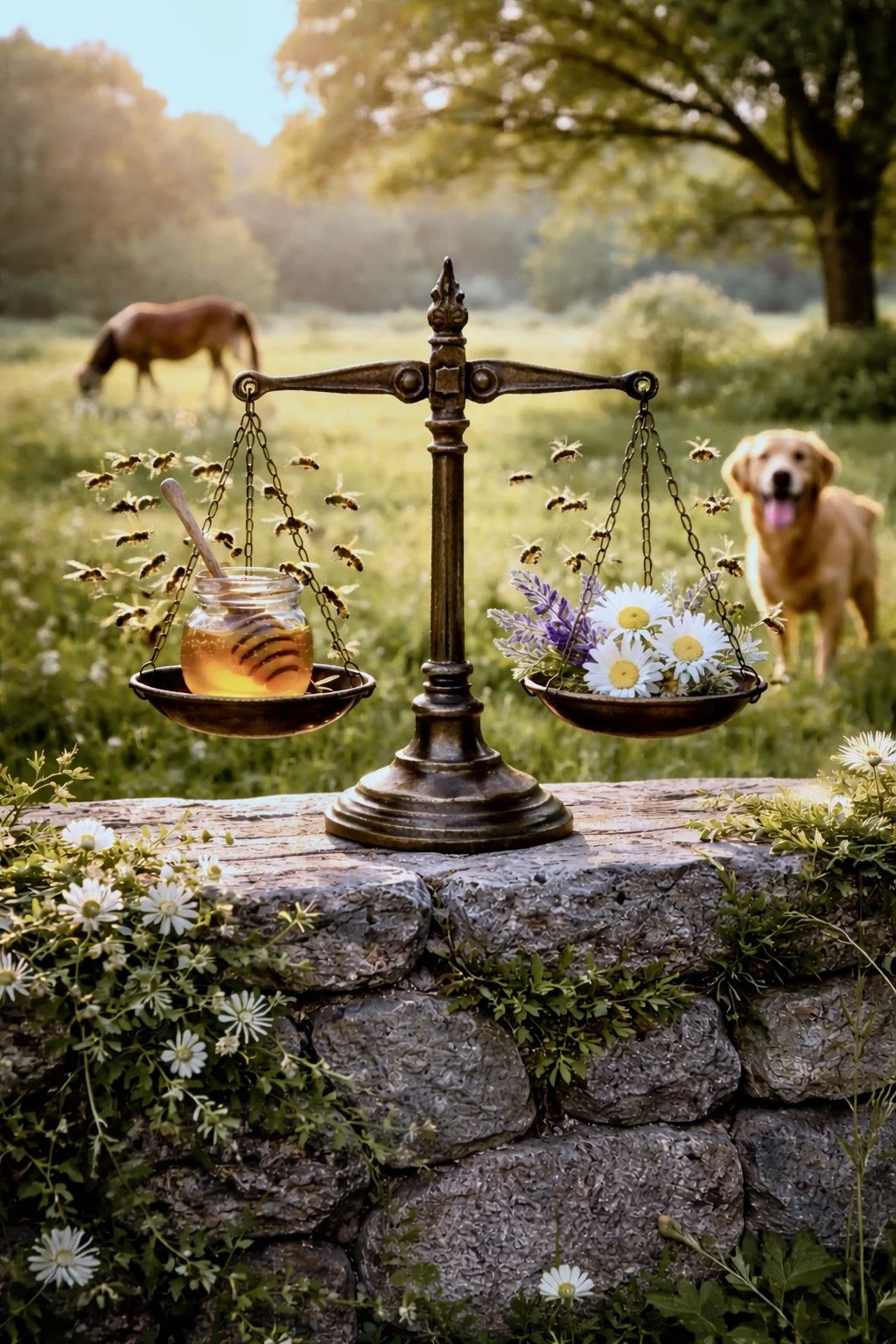
STEPPING BACK TO RESTORE BALANCE
Talking about balance brings me back to my beloved honeybees — and to beekeeping in general and how much I continually learn from them.
Beekeeping has taught me that not every problem is solved by doing more. Sometimes it’s about watching more closely. Listening. Acting only when necessary, and then stepping back again.
And it made me realise something else. I’ve been trying to manage too much in my own small corner of the world. Trying to be present, creative, and informative — and at the same time trying to market my books, my talks, my work — all through social media. It’s possible that many of you never even realised that’s what I’ve been trying to do, and that’s okay.
So, as this new year begins, I’m choosing balance for myself too.
I’ve realised I am not an author who needs content — by which I mean — I’m not someone who has to be constantly producing, posting, or promoting, hoping someone is listening, someone might spot me and my books and talks will miraculously take off! For the past two or three years, that’s what I’ve been trying to do, and the truth is, it hasn’t worked and has only added pressure.
Sure, I have a voice, stories to tell, and moments worth noticing. However, what I need is the right space to use them, without pressure or performance. (All pressure, by the way, totally self imposed!).
That space is starting gently, here in Buckinghamshire — in schools, libraries, and communities — letting the word spread organically rather than relying on algorithms that simply haven’t worked for me.
So, from January, the marketing version of me is stepping away from social media.
Finished. Done. Retired.
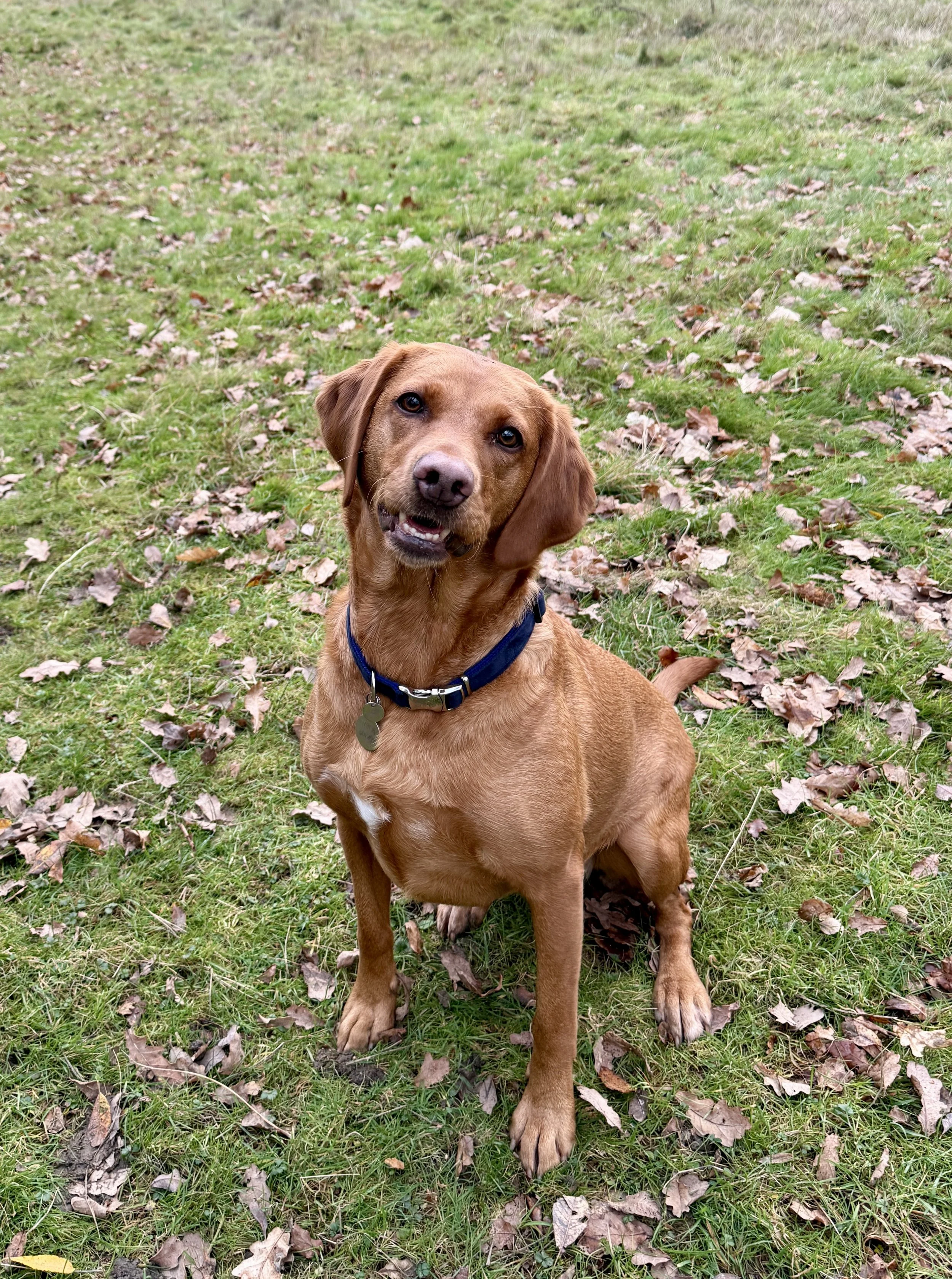
I’m not disappearing. I’ll still be there — sharing videos of my bees, my dog making me smile, and small moments of everyday joy. Facebook, for me, is going back to being a place of lightness again, and that feels important.
If you want to read my longer thoughts, reflections, and stories, my blog will continue to be where they live. It’s where I can write slowly, honestly, and without noise. I will also continue to explore YouTube in a gentle, unhurried way — when I have something to share, not because I feel I should.
So… Happy New Year to one and all. Thank you, as always, for being here, for reading, and for caring — about bees, about balance, and here’s to choosing a kinder pace!