
HOT BEES, LOST QUEENS AND A ROYAL REUNION
We’re having a heatwave!

Yes, that’s right. Here in the UK.
Now, if you’re reading this from somewhere where weeks of hot, sunny weather are perfectly normal, you need to understand that here, in good old Blighty, we are simply not used to this sort of thing.
But, oh my dear sweet Lord, the moaning about it has been biblical!
Come on, guys! We pay good money to travel to places with weather like this and now it’s arrived on our doorstep. I know our houses aren’t designed for it, but pull down a blind, hang a sheet at the window, find a fan, sit in the shade and enjoy the fact that you don’t need to get on an aeroplane to find the sunshine!
There is, however, one thing I am going to have a moan about.
The hosepipe ban.
Where I live, the list of things we’re not allowed to use a hosepipe for includes watering the garden, washing the car, cleaning windows and patios, filling swimming and paddling pools and using a jet washer.
Fair enough. We’re short of water. We all have to do our bit.
BUT...
Yesterday, driving home, I passed our local car wash and saw a queue longer than I have ever seen there before.
A queue of people waiting to have their cars washed.
During a hosepipe ban.
Apparently, registered commercial car washes are exempt.
Now, hold on a cotton-picking moment...
I can’t use my hosepipe to water the plants in my garden — plants that are feeding bees, butterflies and goodness knows how many other insects during weeks of scorching weather — but I can drive down the road and have someone use water to make my car shiny?
Really?
I’m sorry, but somewhere in there my little bee brain is struggling to see the logic.
Anyway, before I climb any higher onto my soapbox, let’s get back to the heatwave — because while we humans have been very busy talking, complaining and generally melting our way through it, there’s another rather important question...
But what about the honeybees?
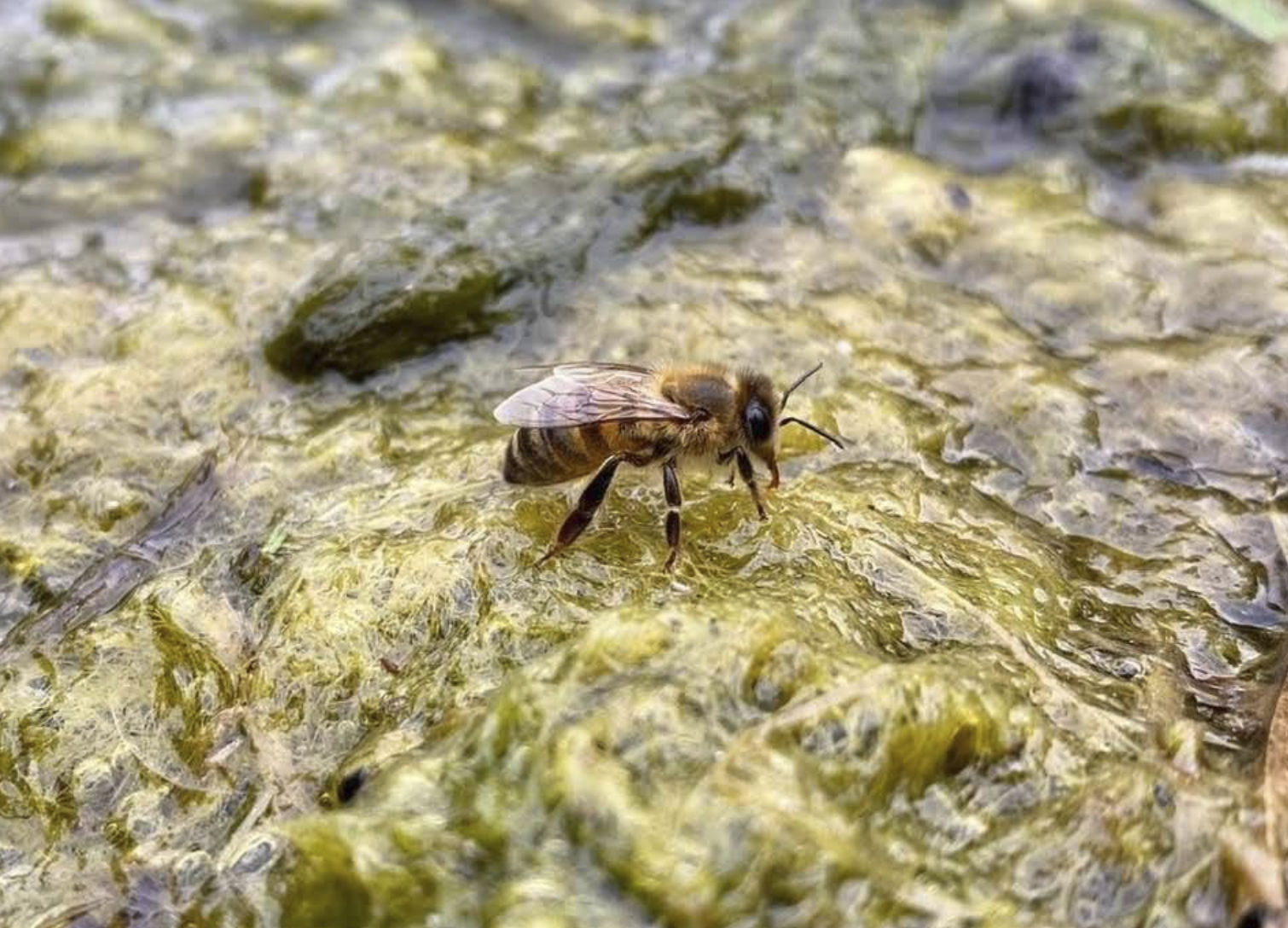
DRINKING FROM A POND
While we’ve been buying fans, closing curtains and complaining loudly to anyone who will listen, the honeybees have simply been getting on with it.
And, as usual, they’re rather better organised than we are!
Honeybees keep the brood area of their hive at around 34–35°C. That’s where the eggs, larvae and pupae are developing, and keeping them at the right temperature is hugely important.
Which is all well and good... until it’s heading towards 34°C outside the hive!
So what do they do?
Well, they can’t exactly pull down the blinds, hang a sheet at the window or order a fan online.
They make their own air conditioning instead.
Some of the bees head off to collect water and bring it back to the hive. Tiny droplets of it are spread around inside, while other bees stand and fan their wings to move air through the hive. As the water evaporates, it cools the air.
I mean, seriously... how clever are they?
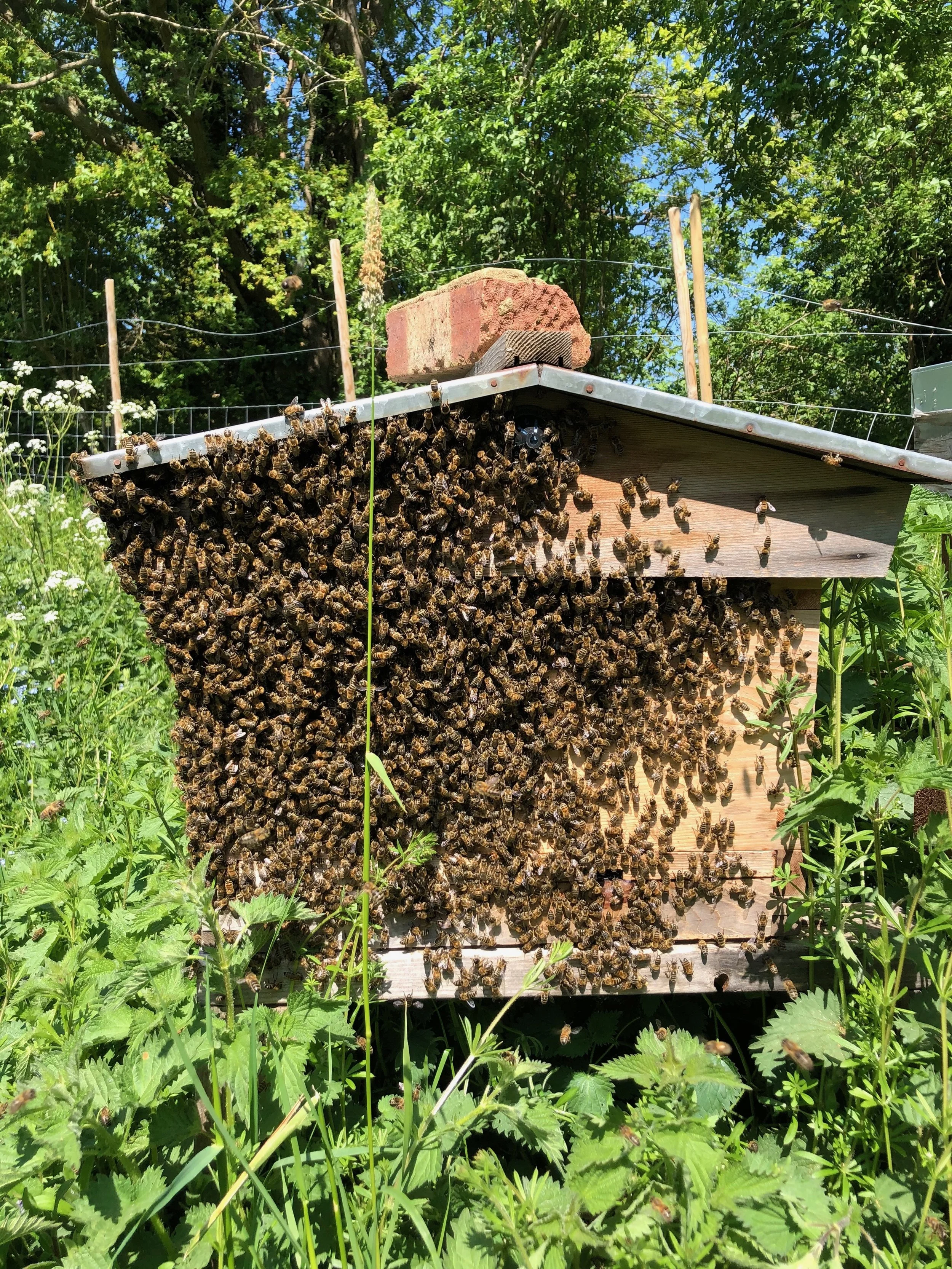
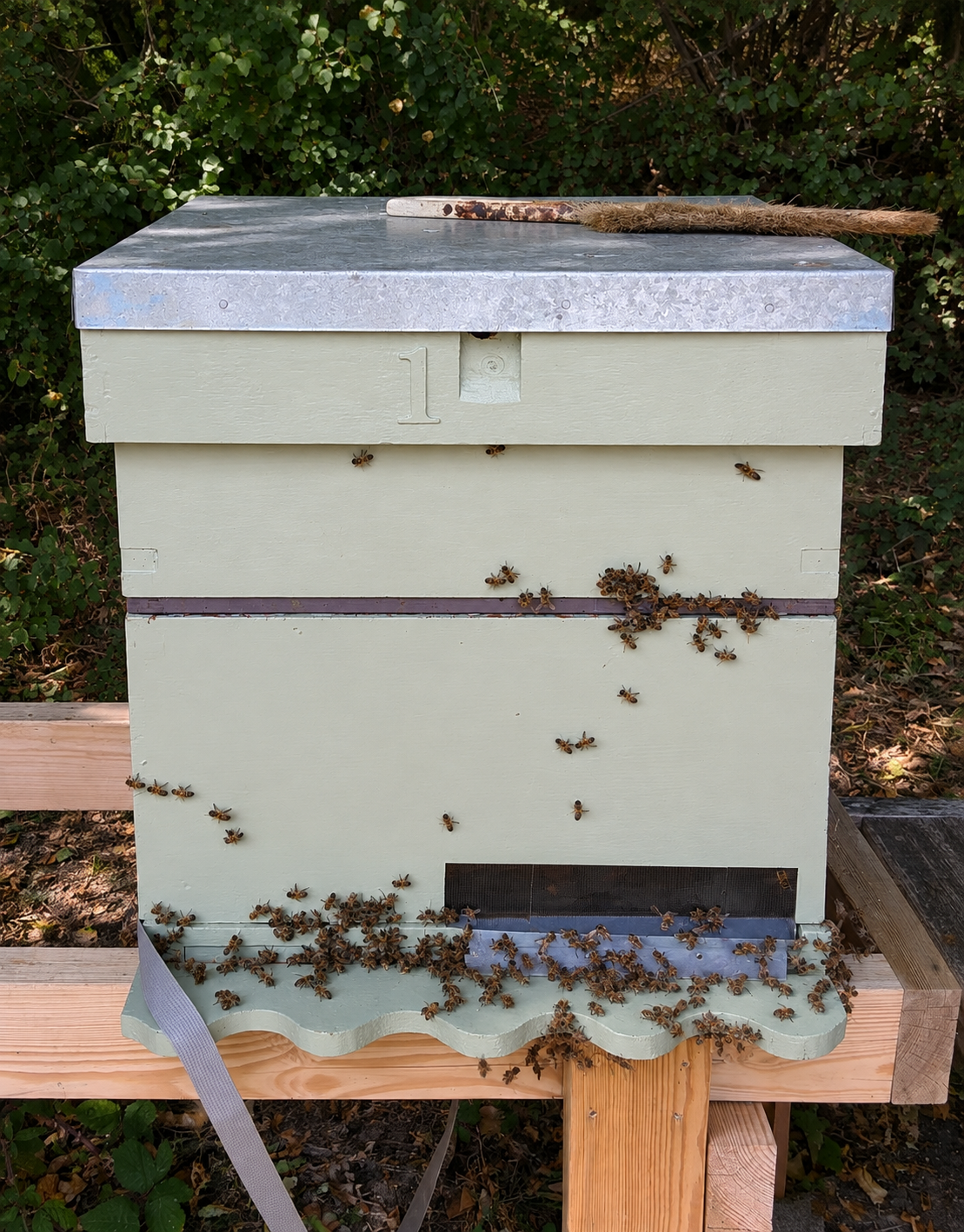
BEARDING
AND THEN THERE’S BEARDING…
This is when you suddenly find thousands of bees hanging around on the outside of the hive, sometimes in great big clumps. If you don’t know what they’re doing, it can look slightly alarming — but they’re basically getting themselves out of the way!
Thousands of warm little bee bodies inside an already hot hive aren’t exactly helpful, so some of them move outside, helping with airflow and making it easier for the bees left inside to keep things cool.
The photo above was taken, quite a few years ago, at our club apiary!
So, while we’re lying in front of a fan announcing to anyone within earshot that we simply cannot cope with this heat for another minute, several thousand honeybees are quietly running their own air-conditioning system.
No electricity. No fan ordered online. No moaning.
But — and there had to be a but — keeping the hive cool is only part of the problem.
Because weeks of heat and very little rain start to change what’s happening outside the hive too.
The ground dries up. Flowers bloom for a shorter time. Plants can produce less nectar and water becomes harder to find. A garden might still look lovely and colourful to us, but to a hungry honeybee it may not be offering anything like as much food as it normally would.
And if less nectar and pollen are coming into the hive, the colony reacts. The queen may slow down her laying, there may be less brood to feed and the bees adjust to what’s available.
And that, really, is where this heatwave has become interesting for me as a beekeeper.
Because my bees have been behaving differently.
They can cool their hive.
They can collect water.
They can change what they’re doing.
They can adapt.
But there’s one thing even these extraordinary little insects can’t do.
They can’t make it rain.
What I’ve noticed with my own bees is that everything seems to have shifted forward a few weeks.
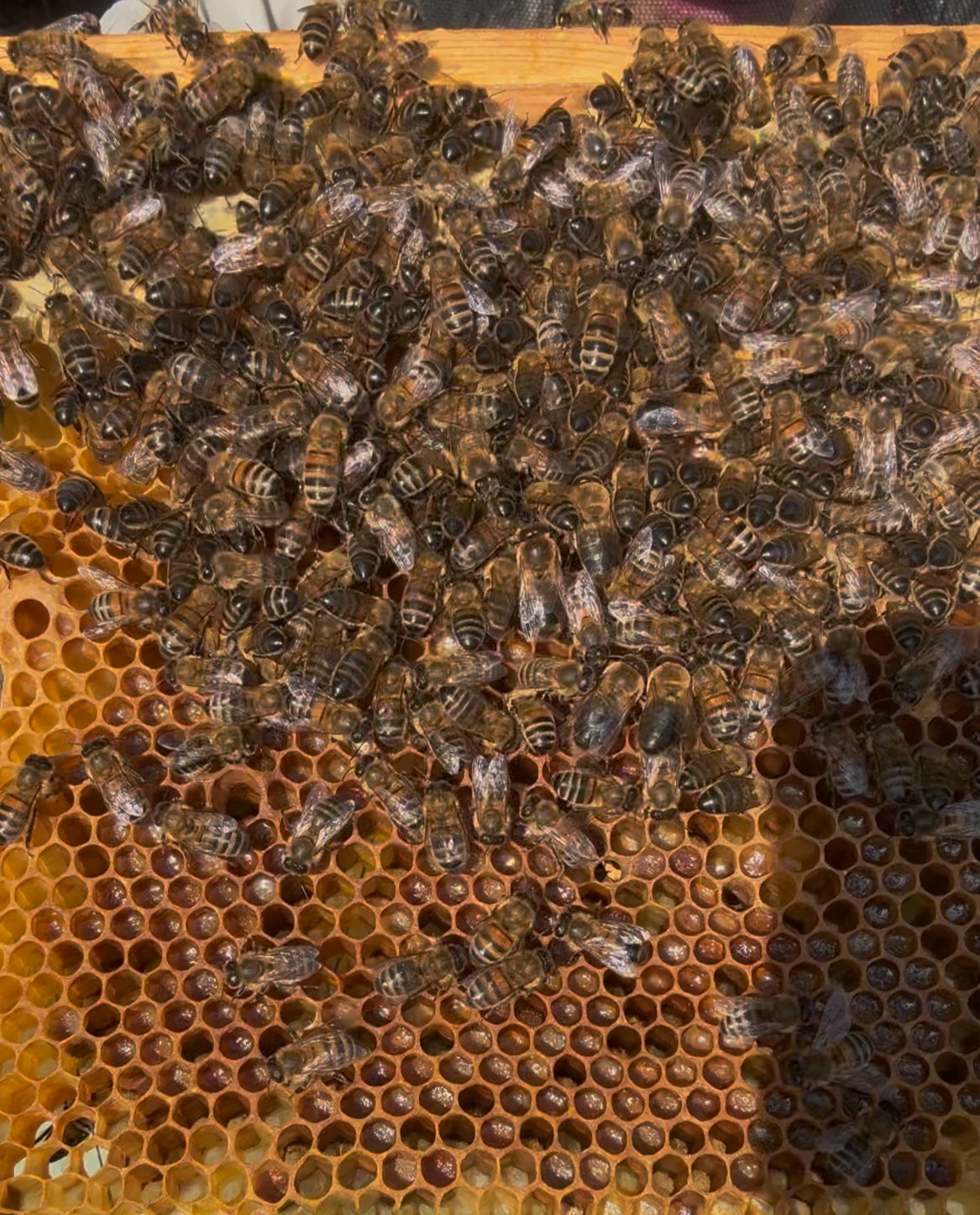
The queens have definitely slowed down their laying and, rather than filling the supers above, the bees are storing nectar down in the brood boxes instead.
It’s almost as though they’re preparing for winter already.
Normally I’d expect to see this sort of winding down as we move towards September, but here we are, still in the middle of August, and they seem to be getting ahead of themselves.
Of course, the bees haven’t looked at the calendar and decided autumn has arrived early! But after weeks of heat, very little rain and less forage available, the colony responds to what’s actually happening outside the hive — not what month it happens to be.
And from what I’m seeing in my hives, it feels as though the bees are already starting to think about winter — even though it’s only August!
Can I be very British for a moment... and talk about something other than the weather?
About two months ago, I decided to split one of my hives.
Hive No. 1 was absolutely bursting with bees and becoming a little bit angsty. Rather than wait for them to start building queen cells in preparation for swarming, I decided to get ahead of them.
Now, normally I might do a Pagden split, but this time I decided to keep things simple and divide the colony.
I found the queen and moved her into a nuc box along with two frames of brood, two frames of food — honey and pollen — and plenty of nurse bees to look after everybody.
Essentially, I gave her everything she needed to start again.
Job done.
Or at least, half the job done.
Because back in the original hive, the bees were now queenless.
When a queen suddenly disappears, the workers realise fairly quickly that something is wrong. Her pheromones are no longer circulating around the colony, so they know they need to do something about it — and fast.
They start building emergency queen cells, using very young larvae already in the hive and feeding them royal jelly so they can produce themselves a new queen.
These are different from swarm cells. Swarm cells are built as part of the colony’s preparations to swarm; emergency cells are exactly what the name suggests:
Help! We’ve lost the queen!
When I went back about eight days later, they had built four emergency queen cells. I removed two and left them with two.
Everything, at this point, was going rather well.
The original queen was merrily laying away in her nuc, while back in the queenless hive, somewhere inside one of those cells, a new queen was developing.
The first queen to emerge should deal with her rival, settle into her new surroundings and, when the time is right, fly out to mate.
Simple.
Did she hecky thump.
I left them alone for about a month to allow all of that to happen.
Nothing.
I gave them more time.
Still nothing.
Six weeks after the split, there was still no sign of a laying queen.
And now I had another problem to think about: laying workers.
WHEN THE WORKERS TAKE MATTERS INTO THEIR OWN HANDS.
Normally, the queen’s pheromones help suppress the workers’ ovaries. But if a colony has been without a queen — and importantly, without young brood — for long enough, some workers can begin laying eggs themselves.
They are female, after all, but they haven’t mated, so their eggs are unfertilised and can only develop into drones.
Sorry, lads, but a hive full of boys isn’t going to get us very far!
Without new worker bees being produced, the colony will eventually dwindle away.
So, decision time.
I had several options.
Option A: Give them a frame containing eggs and very young larvae from another hive and let them have another go at making a queen.
No.
We were already heading through August. By the time they had raised another queen, she had emerged, matured and then needed suitable weather and enough drones around to mate with, we could be well into September.
I really didn’t want to push my luck.
Option B: Accept the very kind offer of a queen from a beekeeper friend who is following the same hygiene regime with her bees as I am.
Also no.
Why?
Because, dear reader, this was my opportunity to LOSE A HIVE!
Six hives instead of seven.
Result!
After much scratching of the head — and with time ticking away — I decided to unite the queenless colony with another hive.
And then I realised I had the perfect candidate.
Remember the original queen I had removed when I made the split?
Her little nuc had done so well that I had recently moved the colony into a full-sized brood box.
So, after all that, I was going to reunite the original colony...
with its original queen.
A family reunion!
And there was another bonus. The queenless colony had plenty of stores and pollen in its brood box, so all of that could go back into the reunited colony.
Nothing wasted.
Boom!
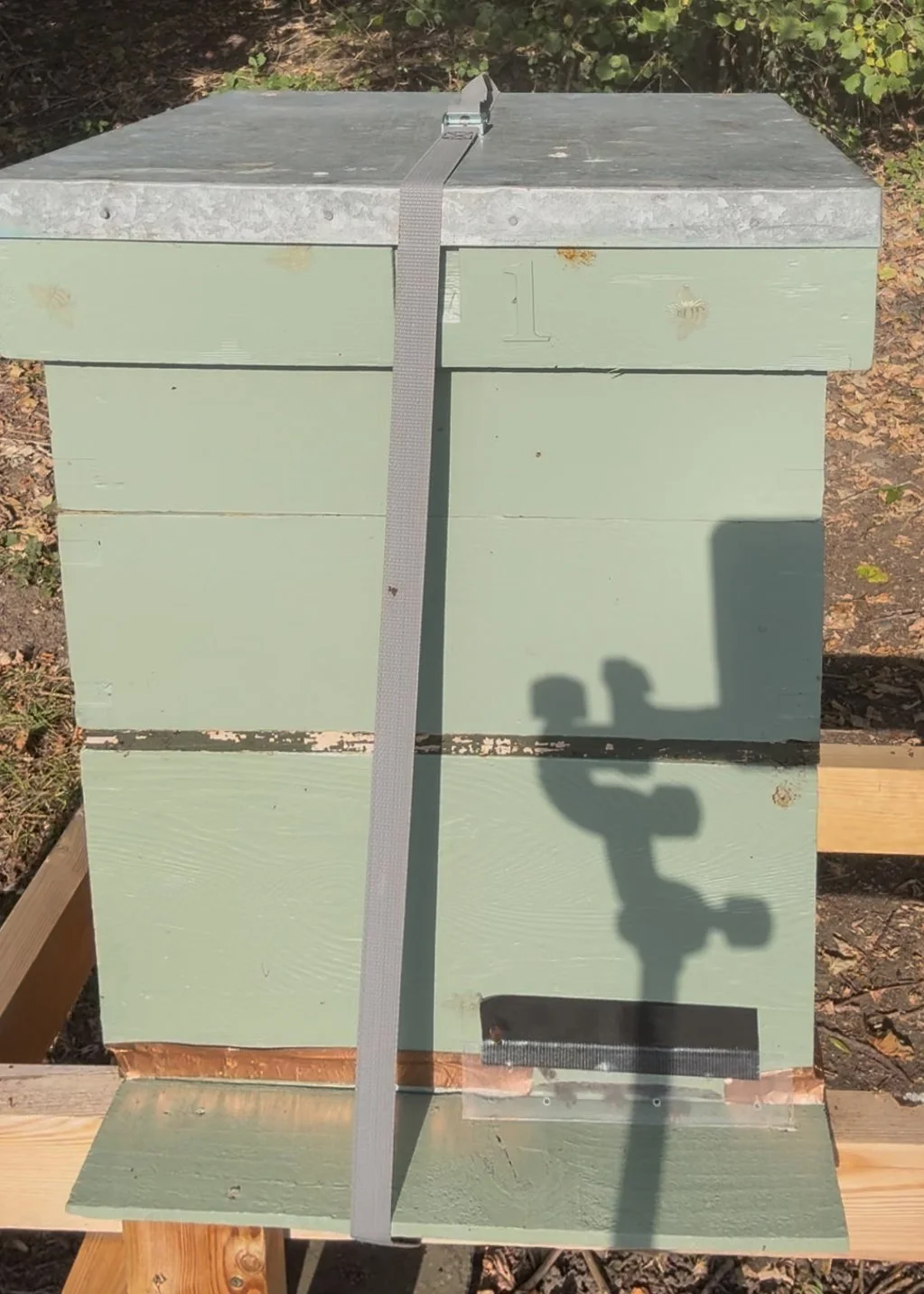
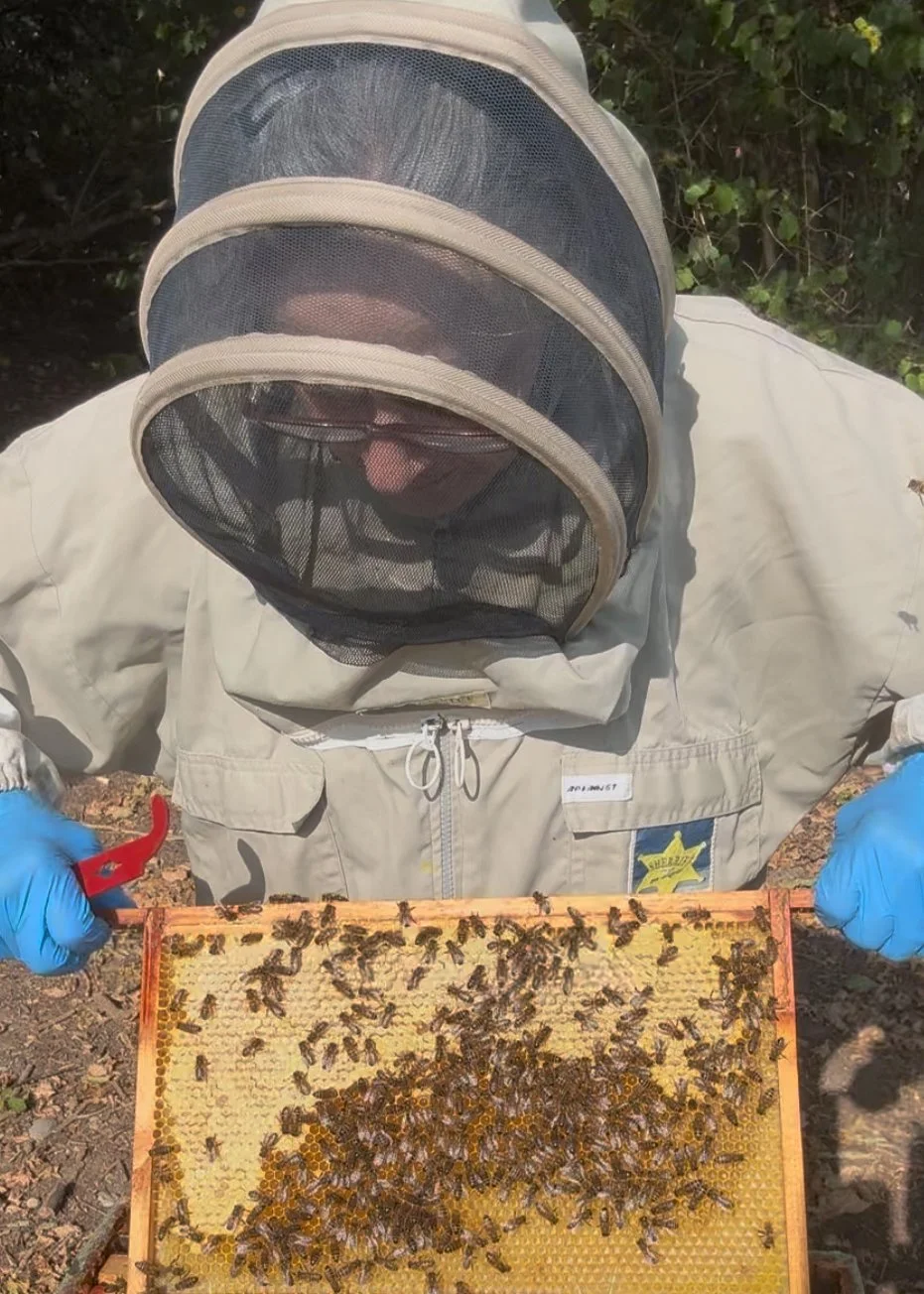
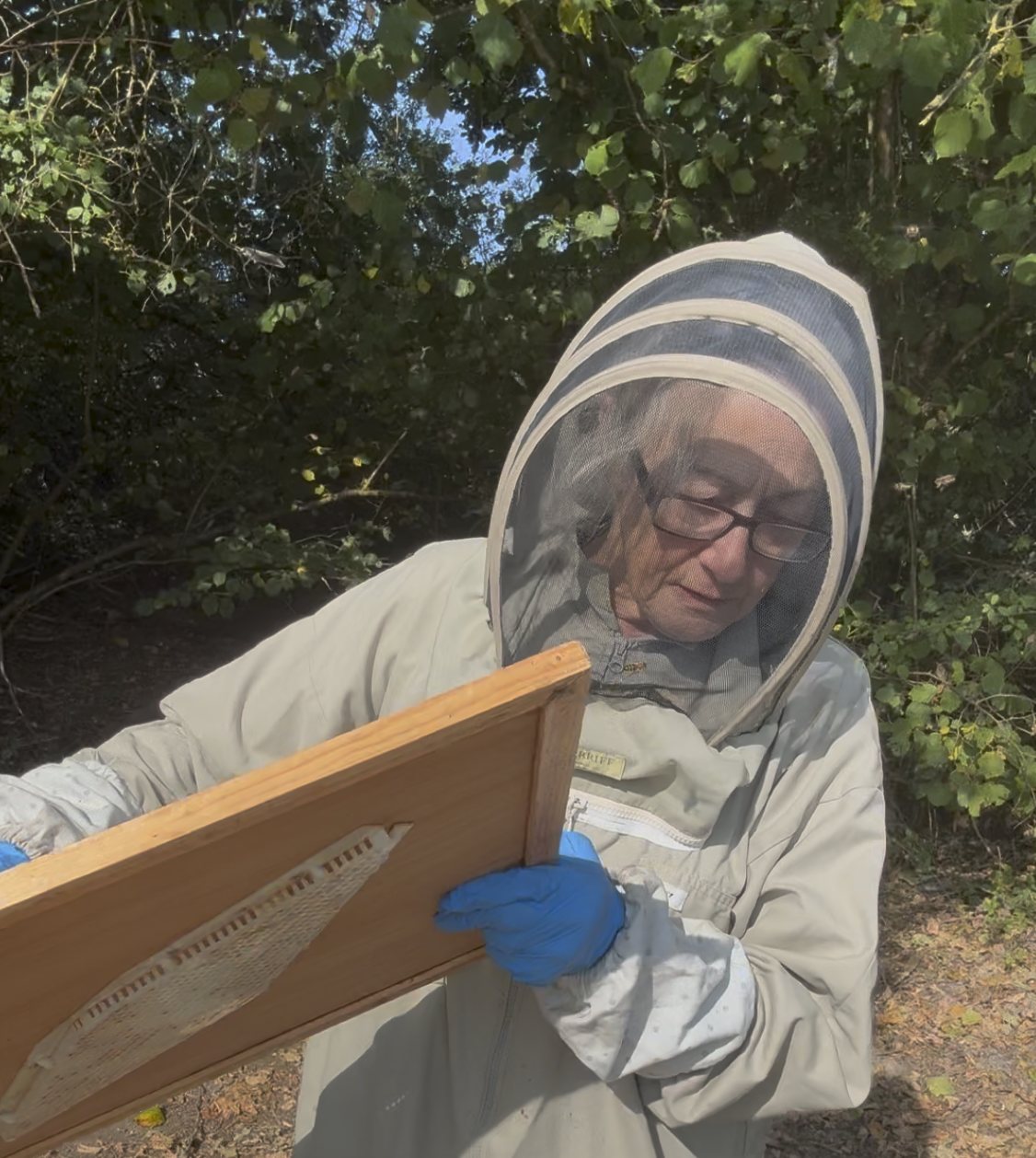
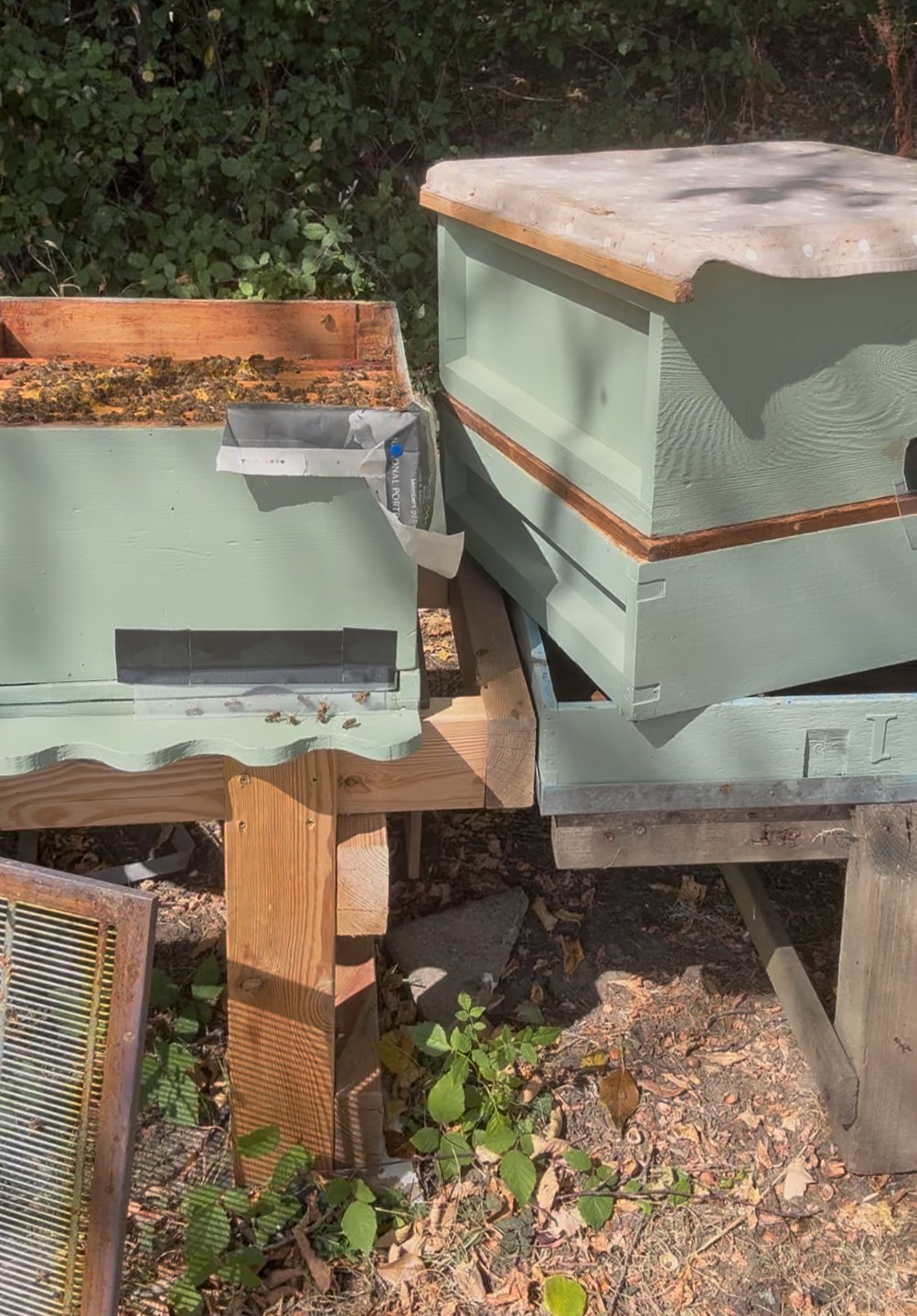
So how do you unite two colonies?
You cannot simply plonk one colony on top of another and shout, “There you go, girls, meet your new housemates!”
They smell different.
Put two unfamiliar colonies together suddenly and there is every chance they will fight — and the queen is one of the bees you really don’t want caught in the middle of the argument.
So first, I had to be absolutely as sure as I could be that the supposedly queenless hive really was queenless.
That meant another careful search.
Was there a sneaky little queen in there who was simply very good at hiding?
Because she wasn’t marked, she could easily disappear amongst thousands of workers. And if she had emerged but hadn’t mated, she might not yet have that lovely long abdomen that makes a laying queen easier to spot.
I searched.
And searched.
No queen.
Right then. We were on.
The queenless colony still had a super on top, and because I had to carry this hive quite a distance to the other one, I put a clearer board underneath the super first so the bees would move down into the brood box.
Had I been uniting two neighbouring hives, I probably wouldn’t have bothered. But I did not fancy carrying a super full of flying bees across the apiary!
I came back that evening at about 8pm, when most of the bees were home, and prepared the queenright hive.
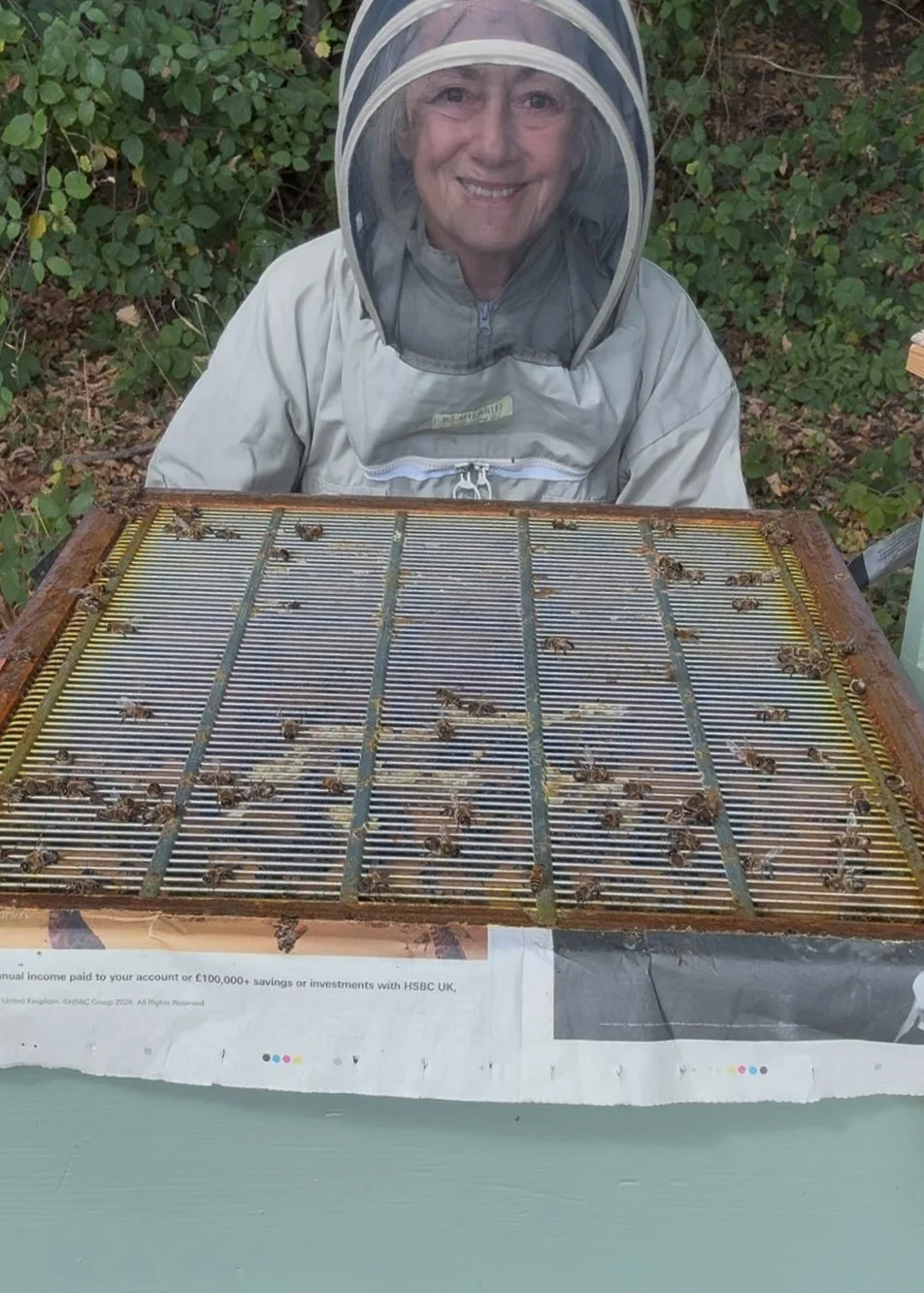
Luckily, this one didn’t have a super on it, so I placed a queen excluder over the brood box. Strictly speaking, you don’t have to do this, but I wanted to know exactly which box my queen was in while all this upheaval was going on.
On top of the queen excluder went a large sheet of newspaper, secured with drawing pins.
Yes.
Newspaper.
Very high-tech, this beekeeping business.
Then it was back to the queenless hive.
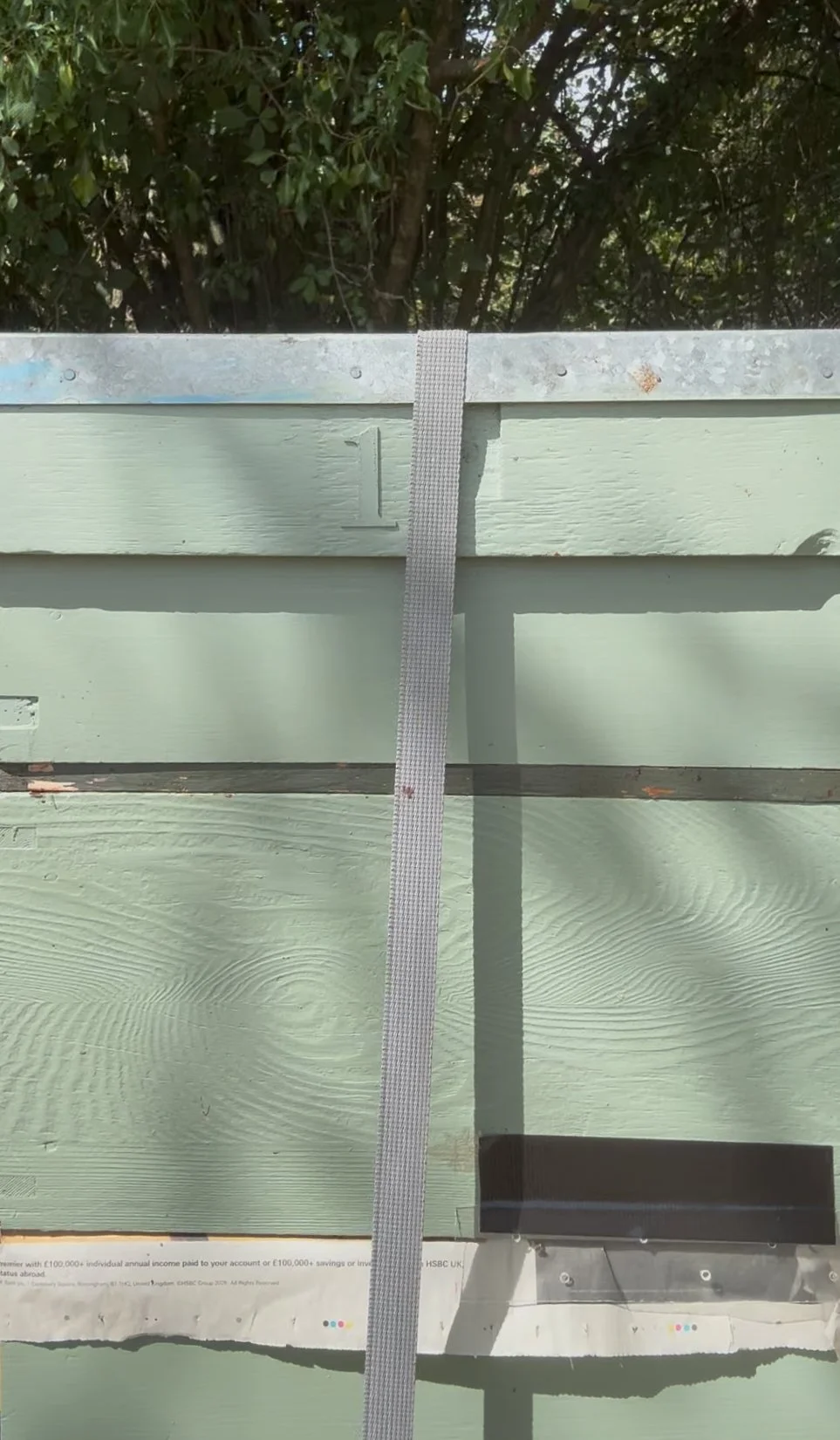
Because I had a fair distance to carry it, I blocked the entrance with pieces of foam. Otherwise I’d have had bees escaping all the way down the apiary, presumably wondering what on earth I was doing with their house.
I carried the now bee-free super down first and put it safely on a crown board beside the other hive.
Then came the heavy bit.
The queenless brood box.
With the floor still attached!
This is important when you’re actually carrying a hive any distance because, rather obviously, remove the floor first and you no longer have a box of bees.
You have several thousand bees and an empty box.
Once I reached the queenright hive, I removed the floor from the queenless brood box.
Chaos.
Bees everywhere.
There were bees on the floor, bees flying around me and probably quite a few wondering why their previously perfectly respectable home was suddenly airborne.
I quickly placed their brood box on top of the newspaper-covered queenright hive.
The bees left behind on the old floor would probably fly back to the original hive position or try their luck at one of the neighbouring colonies. Either way, they should find their way into a hive.
Then the super went back on top, followed by the crown board and roof.
And that was it.
Walk away.
And now the clever bit...
The bees in the queenright colony can smell that something is going on above them.
The queenless bees can smell that something is going on below.
But the newspaper keeps them apart.
Gradually, both colonies chew their way through it.
And while they're doing that, the smells of the two colonies begin to mingle. Instead of thousands of strangers suddenly being dumped on top of one another, they have time to get used to each other.
A couple of days later, you come back and, hopefully, find one colony where previously there were two.
Then it’s simply a matter of tidying everything up: remove what’s left of the newspaper, sort out the brood boxes, shake in any remaining bees, put the queen excluder back where it belongs, followed by the super, crown board and roof.
Job done.
Well...
Almost.
Because there is still one rather important question.
Did they accept the queen?
The whole point of introducing them slowly is to give her the best possible chance, but until I go back into that hive and find her — or, even better, find lovely fresh eggs — I won’t know for certain.
So now we wait.
And I shall be keeping everything crossed that, after splitting this colony, waiting patiently for them to make themselves a new queen, discovering that hadn't worked and eventually putting everybody back together again...
we have ended up exactly where we started.
Beekeeping.
You’ve got to love it.
And now we wait...
For those of you who follow me on social media, you’ll know within the next couple of days whether the great family reunion has worked.
For those of you who don’t follow me...
Well, why don’t you?
Just kidding!
You’ll have to wait until my September blog to find out.
A bit like the doof-doof at the end of EastEnders.
And on that note, I think I’d better wrap things up. I should imagine your head is aching after all that information about uniting hives. Honestly, it’s much easier if you choose the hive next door rather than one you have to carry halfway across the apiary.
But you know me.
Why make something simple when I can gloriously complicate it?
As my husband so often says:
“It’s not easy being you, is it?”
No, it is not!
I’m sitting in the garden writing this, tucked underneath a huge umbrella and, after all that talk of heatwaves, hosepipe bans, queenless colonies and flying bees, I’d quite like to leave you with something lovely.
We have two hummingbird hawk-moths visiting the garden at the moment. They appear most afternoons, hovering from flower to flower with those extraordinary wings going nineteen to the dozen.
I managed to catch one of them on video and I thought I’d share it with you.
https://www.youtube.com/shorts/A9xFCqB-3Wk
Isn’t she beautiful?
So, that’s me for August.
Have a wonderful rest of the month and I’ll see you all again in September, when things in the beehive will be changing once more. The drones will be starting to receive their marching orders and a rather special generation of bees will be taking over...
Winter bees.
What?
I hear you say.
Ah well.
You’ll have to wait until September to find out.
See ya!