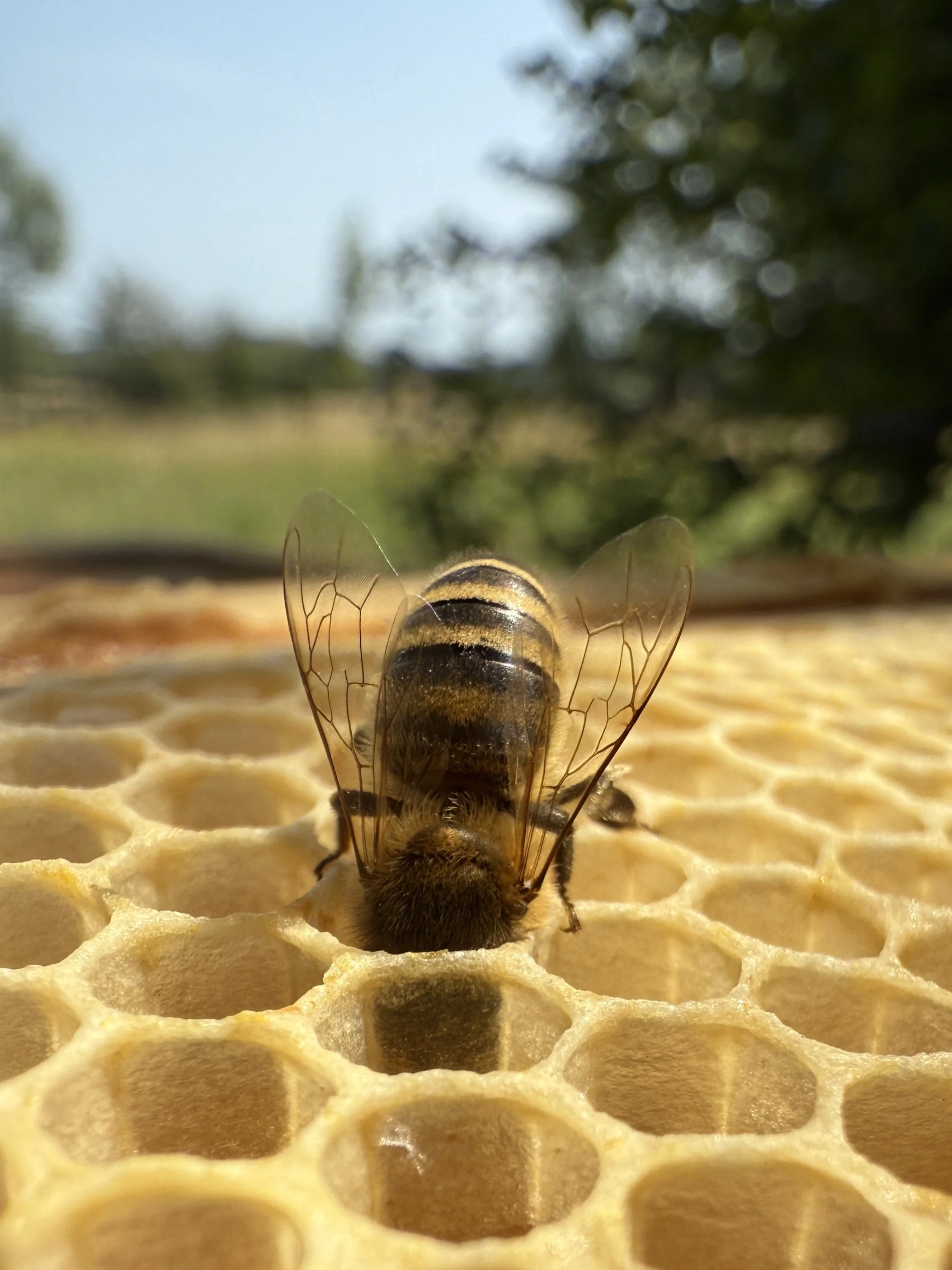
WHEN CHAOS, EXCITEMENT, PANIC, AWE, AND ADMIRATION ALL HAPPEN AT ONCE.
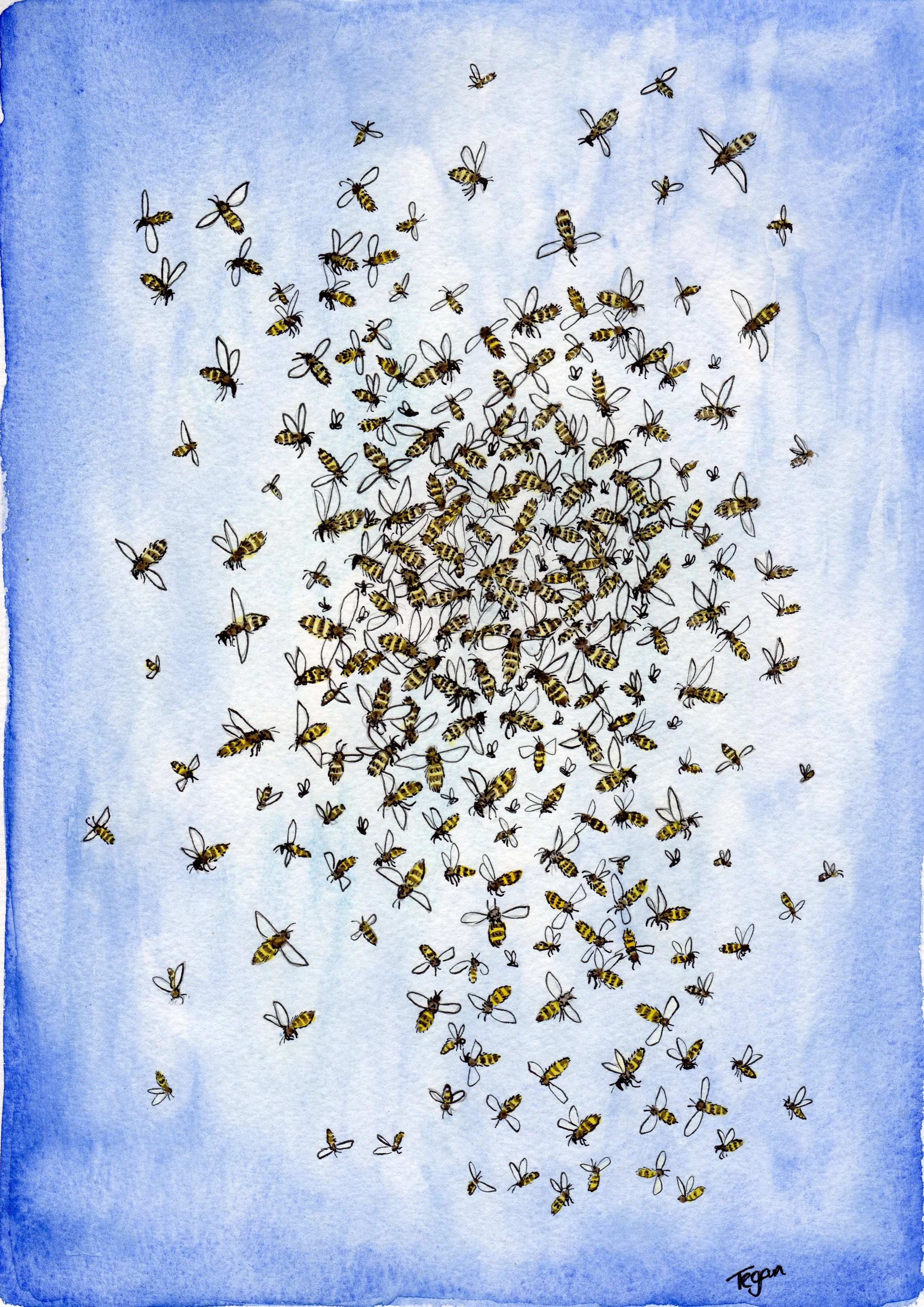
At some point during one of my YouTube videos, I talked about splitting hives to help prevent swarming. Oh, how I wish I had listened to my own advice, because two out of my three hives — which have now become five thanks to swarming! — decided to swarm before I had the chance to split them.
Not only did they swarm before I had managed to inspect them properly… they did it right in front of me.
Well… one did.
The other did it behind my back.
There I was, busily filming a video for YouTube, explaining how patient I had been by not rushing into the hives because of the rain and miserable temperatures hovering around 14°C. I was feeling terribly sensible and responsible, talking about how important it is to wait until the temperature reaches around 16°C before opening a hive.
All very professional.
All very wise.
All very “look at me being a good beekeeper.”
Meanwhile — like something out of a sitcom — the bees were swarming behind me.
Needless to say, I abandoned the carefully planned educational video and started filming the swarm instead.
👇
https://www.youtube.com/shorts/ATeYPgSGhB8
Thinking about it now, that was probably a mistake. The original footage would almost certainly have earned far more views. It had all the makings of one of those classic “It’ll Be Alright on the Night” moments — for those of us old enough to remember it!
The second swarm was equally determined to embarrass me.
I was inspecting the hive next door when I suddenly noticed tremendous activity at the entrance of another colony. The air seemed to change in an instant. Bees began pouring from the hive at astonishing speed, spiralling upwards into the sky as they rushed to follow their queen.
I quickly covered the hive I was working on and turned around — but of course, by then it was far too late. The bees had made their decision.
Thankfully, I did manage to catch both swarms, which is how three hives became five.
Although I say “manage” rather casually…
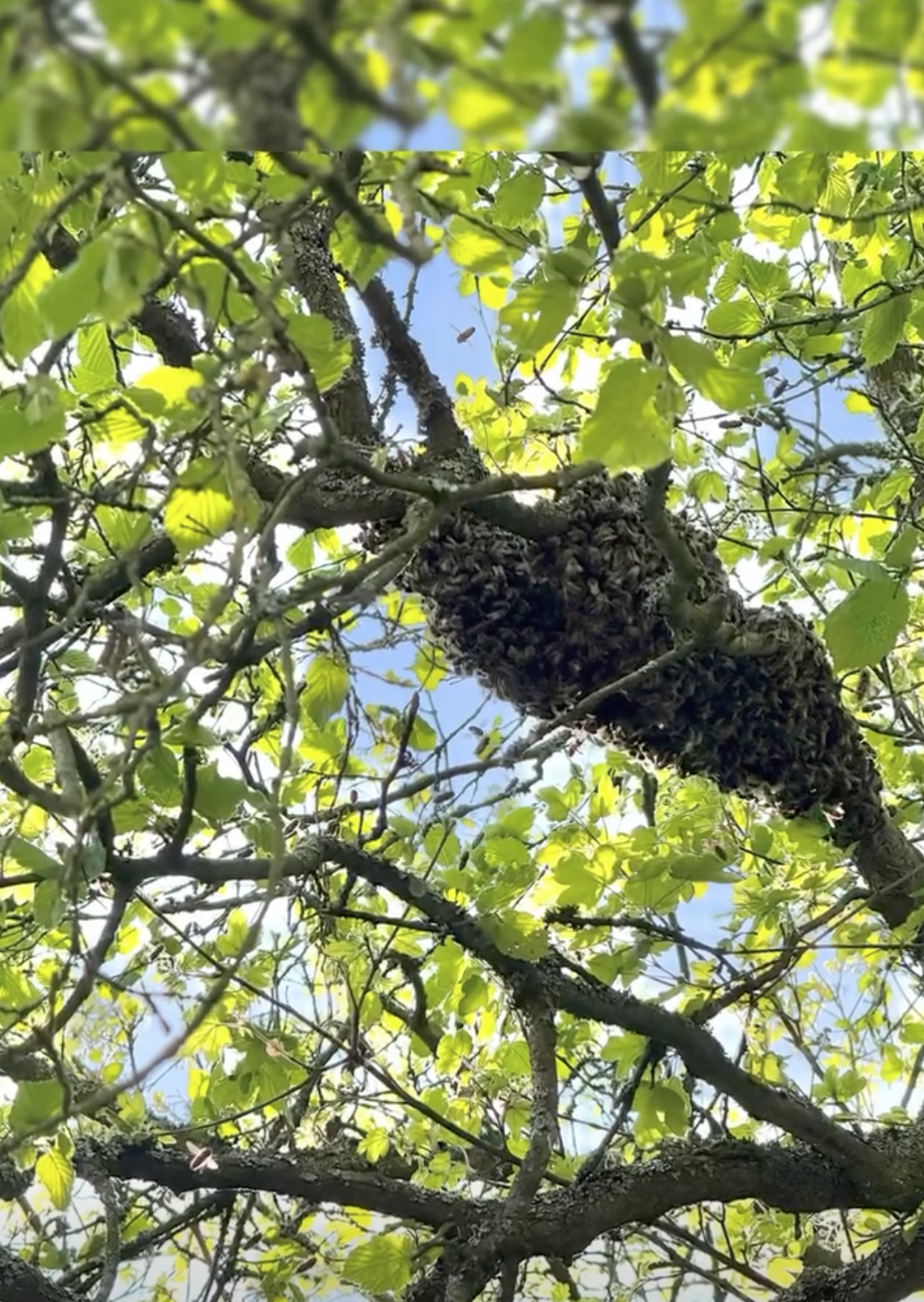
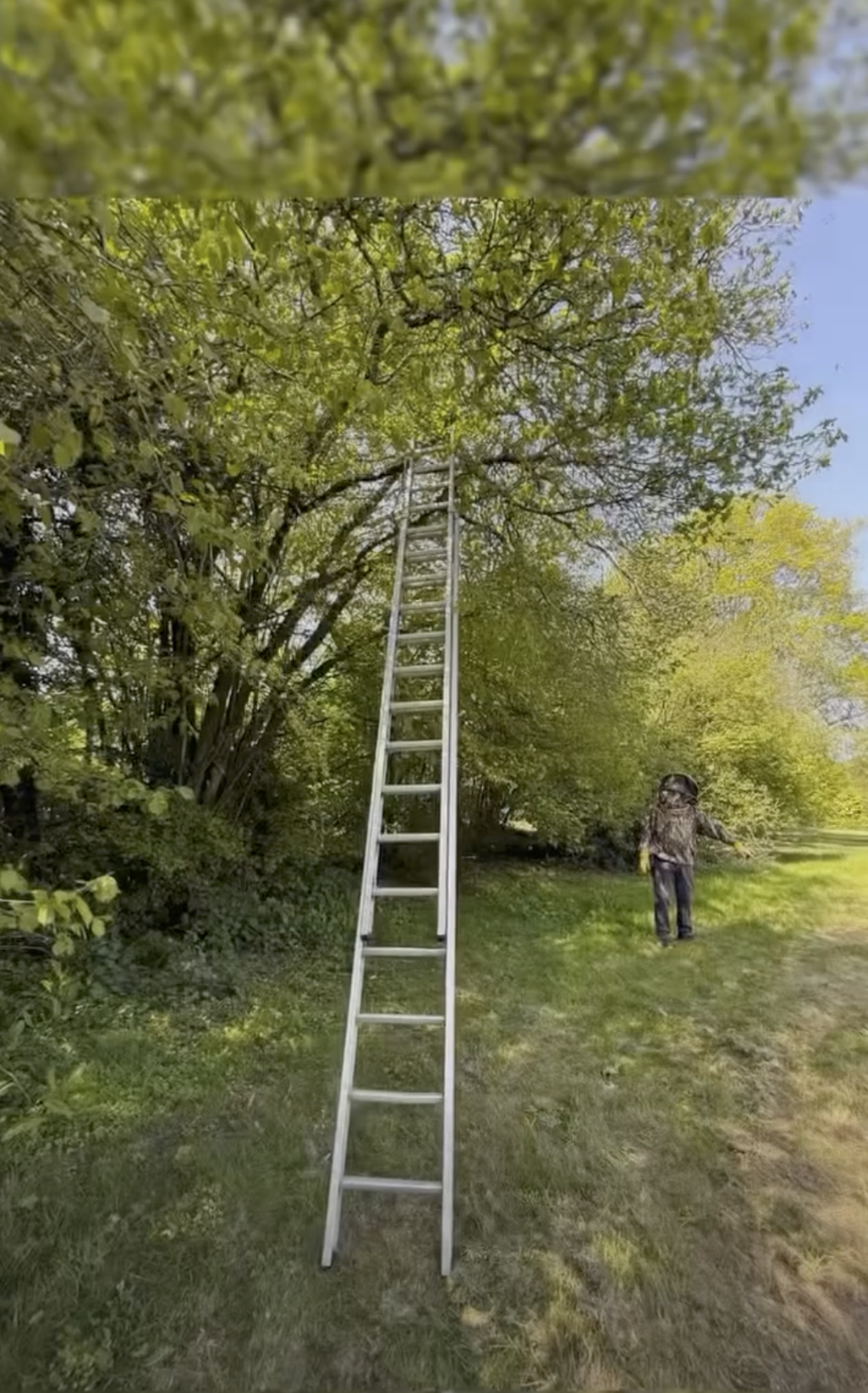
One swarm decided to settle in a tree almost as high as a house, requiring me to perform what can only be described as a slightly questionable balancing act involving a ladder, a cardboard box, branch loppers, a bee brush, and far more confidence than common sense.
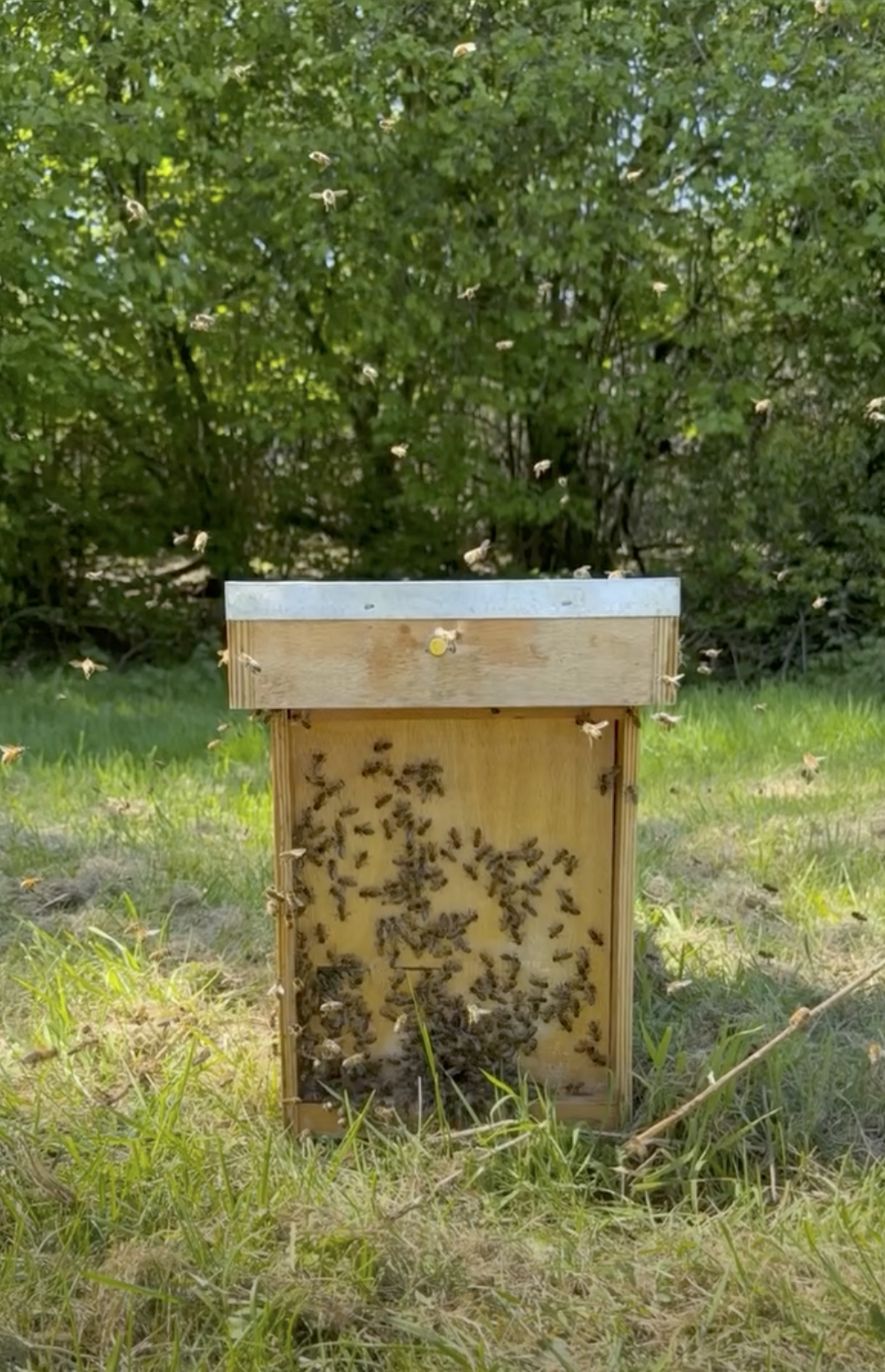
The other chose the middle of a bramble hedge.
I can assure you that while honeybees are usually fairly gentle during a swarm, brambles are not.
By the time I had retrieved the bees, my long-cuff surgical gloves were torn to shreds — along with my hands. I emerged scratched, tangled in bits of hedge, and wondering why I hadn’t taken up a safer hobby.
Still… there is something rather wonderful about following a swarm. Exhausting, nerve-racking, slightly ridiculous — but wonderful. For a beekeeper, it is one of those moments where panic, excitement, chaos, admiration, and awe all happen at the same time.
And honestly? Once a colony has truly decided to swarm, there is something unstoppable about it.
So… let’s talk about swarms.
And how beekeepers try to prevent them.
Why Do Honeybees Swarm?
One of the most magical — and sometimes alarming — sights of late spring and early summer is seeing a cloud of honeybees swirling through the air like dark confetti. To somebody unfamiliar with bees, it can look frightening. But to a beekeeper, it is one of nature’s most extraordinary moments.
Swarming is not aggression.
It is simply the honeybee colony’s natural way of creating a new colony.
Although the queen lays the eggs, a honeybee colony behaves almost like one large living thing, all working together. When bees swarm, the colony is really dividing in two. One group leaves with the old queen to find a new home, while the remaining bees stay behind to raise a new queen and continue life in the original hive.
It is nature’s way of saying, “We have grown too big for this space. Time to begin again somewhere else.”
As spring arrives and flowers begin to bloom, the queen lays more and more eggs and the colony grows quickly. The hive becomes crowded with bees, brood, pollen, nectar, and honey stores. Eventually, the workers begin building queen cells — those larger peanut-shaped cells where new queens will develop.
Meanwhile, something fascinating happens just before the swarm leaves. The worker bees gorge themselves on honey, filling their honey stomachs like tiny fuel tanks. They do this because once they leave the hive, they may not eat again for some time. They need energy to fly, survive outdoors, and begin building fresh wax comb in their new home.
Then, usually on a warm, calm day, the atmosphere suddenly changes. The old queen leaves the hive surrounded by thousands of worker bees in a great humming cloud. It can look dramatic, but swarms are often surprisingly gentle because the bees are focused on protecting their queen and finding somewhere new to live.
At first, the swarm does not usually travel very far. The bees often settle temporarily in a nearby tree, hedge, or fence post, clustering together around the queen in a large buzzing ball while scout bees fly off searching for a suitable new home.
This is one of the things I find most amazing about honeybees.
The scout bees return and communicate possible new homes to the rest of the swarm using the famous waggle dance. Gradually, the bees reach a collective decision before suddenly taking to the air again and flying off together to their new home.
Back in the original hive, young queens will emerge. Usually, one will eventually become the new queen of the colony, continuing the cycle honeybees have followed for millions of years.
For beekeepers, swarm season brings both excitement and hard work. We try to prevent swarming where possible because losing half a colony can weaken the hive. Yet at the same time, it is impossible not to admire the brilliance of what is happening. Swarming may look chaotic to us, but to the bees it is organised, purposeful, and completely natural.
Whenever I watch a swarm settle quietly on a branch, I am reminded that honeybees have been doing this successfully long before humans ever existed. There is something very humbling about that.
Splitting a Hive — to Prevent Swarming
One of the questions I am often asked during swarm season is, “Can beekeepers stop bees from swarming?”
The truthful answer is… not entirely.
Swarming is a completely natural instinct. Honeybees have been doing it for millions of years. However, beekeepers can sometimes reduce the urge by giving the colony what it feels it needs most — more space.
One of the most common ways of doing this is by “splitting” a hive.
Although the name sounds dramatic, splitting is simply dividing one strong colony into two smaller ones before the bees decide to swarm naturally themselves. In many ways, it works with the bees rather than against them.
When a colony becomes crowded in spring, the worker bees begin preparing queen cells for new queens. This is usually the first warning sign to the beekeeper that swarming may soon happen. If nothing changes, the old queen will often leave with thousands of bees to search for a new home.
To try and prevent this, a beekeeper may carefully separate part of the colony and place it into another hive. One hive keeps the old queen while the other is left with queen cells so a new queen can emerge and take over.
It sounds simple written down, but it takes care, timing, observation, and sometimes a bit of luck.
Beekeepers must make sure both colonies have enough bees to survive, enough brood to continue growing, food stores, and the right balance inside the hive. In many ways, it feels less like controlling the bees and more like gently persuading them.
For the bees, the split creates the feeling that swarming has already happened. The overcrowding is reduced, and the urge to swarm often settles down.
One thing I always find fascinating is how quickly honeybees adapt. Within days, both colonies reorganise themselves as though nothing unusual has happened. Nurse bees continue caring for larvae, foragers return with pollen and nectar, guards protect the entrance, and life carries on.
If a new queen is being raised, that is always rather magical to watch too. Hidden inside her queen cell, a young queen develops surrounded by warmth and care from the workers. Once she emerges, she must take mating flights before returning to the hive to begin laying eggs and continuing the life of the colony.
Of course, not every split works perfectly. Beekeeping has a wonderful way of keeping us humble. Sometimes the bees completely ignore our plans and remind us that they still know far more about being bees than we ever will.
Yet splitting hives can be one of the most rewarding parts of beekeeping. It allows beekeepers to increase colony numbers naturally while reducing the risk of losing a swarm. Here in the UK, a swarm that escapes into the wild has only around an 80% chance of survival.
To me, splitting hives says something rather lovely about life. Sometimes things become overcrowded simply because growth is happening. Sometimes a little more space, a change, or a fresh start can make all the difference. Honeybees seem to understand that naturally.
One thing beekeeping has taught me is that we are never truly in control of the bees. No matter how much we learn, the bees will always humble us! At best, we are simply learning when to help, when to step back, and when to let nature get on with what it has been doing perfectly well for millions of years.
If you want a detailed description of splitting hives head over to The Apiarist blog. He’s absolutely brilliant and describes things in fantastic detail.
👇
https://theapiarist.org/doing-the-splits/
And finally… after all the drama of swarm season, ladders, brambles, torn gloves, and bees disappearing into the sky, here is one of my girls doing what honeybees do best.
Head first in the honey and completely ignoring the chaos around her.
Honestly… there’s probably a lesson in that somewhere.
See you next month!