
THE ENTRANCE OF THE QUEEN OF SHEEBA!
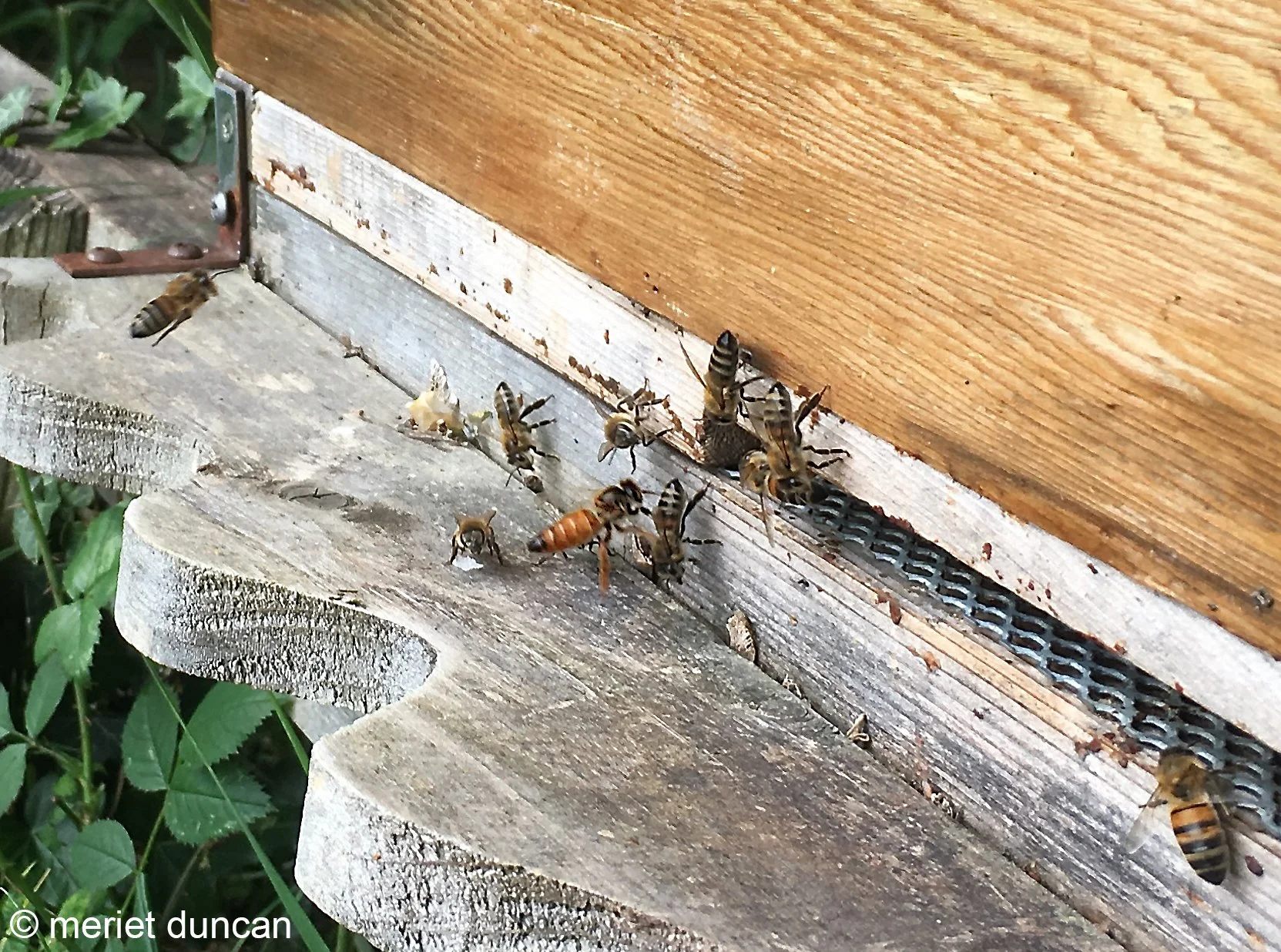
A queen bee returning from her nuptual flight
Following on from last month's blog about swarming, I thought I'd tell you what happened next.
After three of my hives swarmed, one of which got away, and one colony that I deliberately split, I found myself with three queenless hives.
Each had been left with a single queen cell and my fingers very tightly crossed.
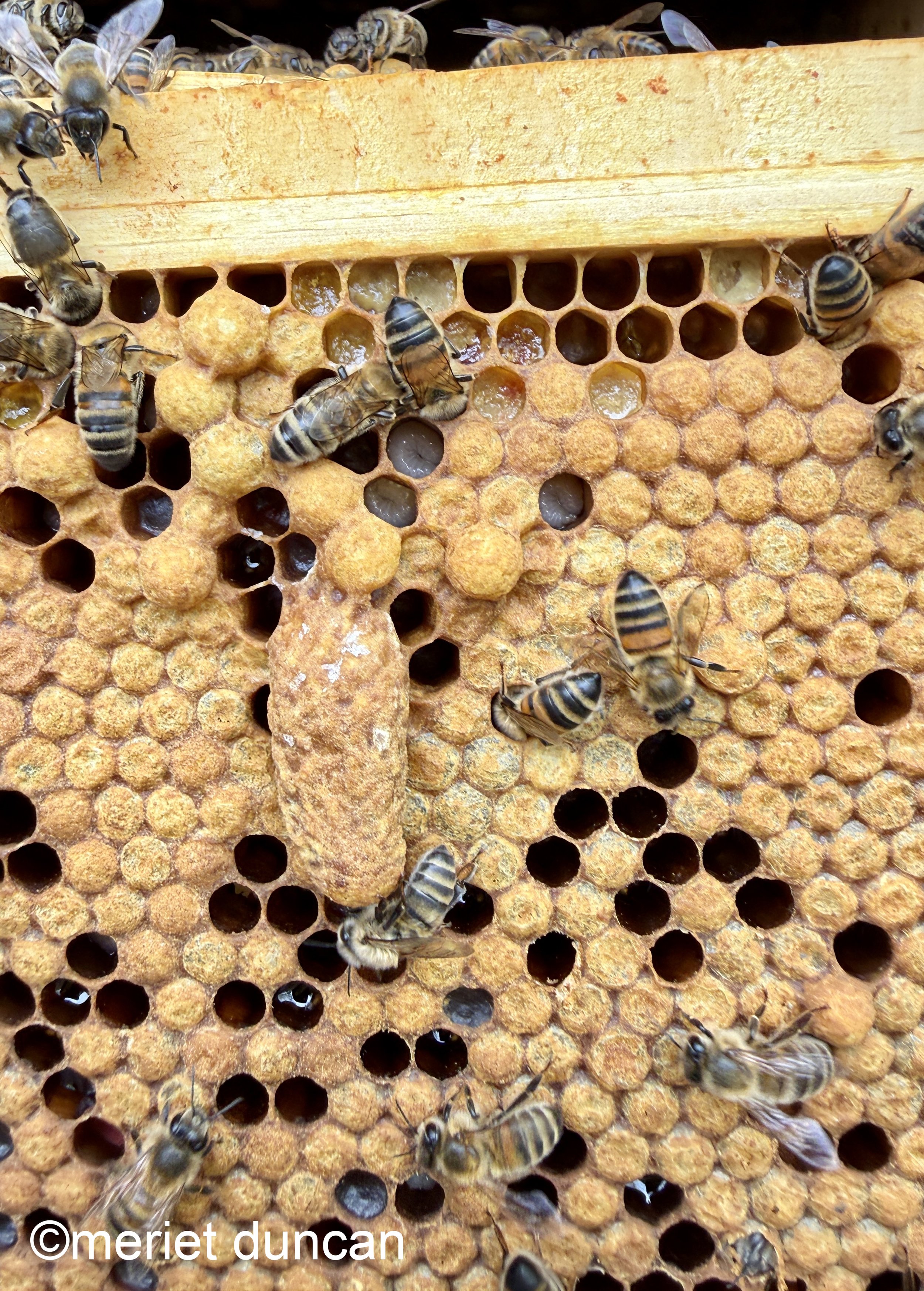
Single queen cell
Now came the waiting game.
Over the next four to six weeks, a lot needed to happen. A queen had to emerge, mature, successfully mate and then return home safely before she could begin laying eggs.
As I write this, two of those hives have lovely laying queens.
One does not.
The bees in that hive had become a little feisty, which is often a sign that all may not be well. There was no sign of a queen and no eggs to be found, so I took a frame of freshly laid eggs from one of my stronger colonies and gave it to them.
Now I wait.
If there is a queen in the hive and she is simply out on her mating flights, the workers will ignore those eggs. They know she is there, even if I don't.
If, however, the queen cell failed, the queen never emerged, or she was lost on her mating flight and didn't make it home, the workers will use one of those eggs to raise a replacement queen.
It sounds simple, but for a beekeeper it can be a nail-biting few weeks.
Which got me thinking about queens and one of my favourite photographs.
THE ENTRANCE OF THE QUEEN OF SHEBA
About seven years ago, I was leaving my apiary after checking my bees when something caught my eye.
I was walking to my car when I turned back for one last glance at the hives. There, hovering above the landing board of one colony, was an insect that immediately made me stop in my tracks.
At first, I thought it was a hornet.
It looked far too large to be a honeybee and was behaving oddly. Rather than going straight into the hive, it was bobbing up and down in front of the entrance, almost as though it couldn't quite make up its mind whether to go in or not.
From a distance, that's exactly the sort of movement that would make you think, "Hornet!"
Then I looked again and couldn't believe my eyes…it wasn't a hornet at all.
It was a queen honeybee returning from her nuptial flight.
Thankfully, I always have a camera nearby and somehow managed to capture the moment, albeit a tad shaky!
In fact, I watched her for quite some time. She seemed in no particular hurry to enter the hive, continuing her bobbing and circling movements around the entrance while she checked her surroundings and reorientated herself.
As I watched, one piece of music immediately sprang to mind: Handel's Arrival of the Queen of Sheba.
If you've never heard it, imagine trumpets, celebration and a grand entrance. That's exactly what this moment felt like.
The remarkable thing is that this queen's story began long before I photographed her.
FROM EGG TO EGG LAYING MACHINE
Like every worker bee in the hive, she started life as an ordinary fertilised egg laid by her mother.
When a colony needs a new queen, the workers select several very young female larvae and begin raising them differently. Exactly how they choose those particular larvae remains one of the many mysteries of the honeybee world.
For the first three days of life, all larvae are fed royal jelly by the nurse bees.
Then the menu changes.
Future workers receive a mixture of pollen and honey. The future queen does not. She continues to be fed royal jelly and royal jelly alone.
This remarkable substance, produced by the nurse bees, contains proteins, sugars, vitamins and compounds that trigger an entirely different developmental pathway.
Genetically, the queen and her worker sisters are almost identical.
Yet because of her diet, the queen develops functioning ovaries, a larger body, a longer abdomen and a lifespan measured in years rather than weeks.
In effect, the workers create royalty from an ordinary egg.
As the chosen larvae grow, the workers extend their cells into the familiar peanut-shaped queen cells that hang from the comb.
Inside one of these cells, the future queen transforms from larva to pupa and finally into an adult bee.
Just sixteen days after the egg was laid, she emerges.
And she doesn't arrive quietly.
Newly emerged queens produce a distinctive piping sound, while rival queens still sealed inside their cells answer with a muffled quacking or gurgling noise.
To a beekeeper, it is one of the most exciting sounds in the hive.
To the queens themselves, it is more like a declaration of war.
Often, the first queen to emerge seeks out rival queen cells and attempts to destroy them before another queen can emerge. Sometimes the workers allow this. Sometimes they prevent it because the colony intends to cast further swarms.
For several days, the young queen remains inside the hive while her body matures.
Then she ventures outside for a series of short orientation flights.
Think of them as flying lessons.
She hovers in front of the hive, turning repeatedly to face it while memorising landmarks so she can find her way home again.
Only when she is ready does she embark on the most important journey of her life.
Her nuptial flight.
On warm, sunny afternoons she flies to locations known as Drone Congregation Areas.
These invisible meeting places have been used by honeybees for thousands of years. No one quite knows how the bees know where they are, yet year after year drones gather there in their thousands.
The young queen flies into this crowd of eager suitors and mates in mid-air with multiple drones, often between ten and twenty .
Each successful drone leaves part of himself behind and dies shortly afterwards.
The queen stores the sperm from these matings in a special organ called the spermatheca, carrying enough genetic material to fertilise eggs for the rest of her life.
And then she must find her way home.
For the beekeeper, this is the nail-biting part.
Anything could happen…The weather could change…a bird could catch her…a hornet could make a meal of her…she could simply fail to find her way back.
Every beekeeper with a colony waiting for a queen spends this period hoping.
Then, one day, if all has gone well, she returns.
A few days later she begins laying eggs. Tiny white grains of rice standing upright in the bottom of each cell. To most people they look insignificant. To a beekeeper, they are a sign that the queen has returned safely, mated successfully and that the future of the colony is secure for now. Incidentally, she lays over 2,000 eggs a day!
While all this drama has been unfolding, the season has quietly moved on.
THE JUNE GAP
The spring blossom has faded, many beekeepers have harvested their spring honey, and we enter what beekeepers call the June Gap.
This is the period between the spring flowers finishing and the summer nectar sources really getting going.
Some beekeepers leave a super of honey on for the bees to use during this quieter period. Others remove the honey and feed sugar syrup if stores become low.
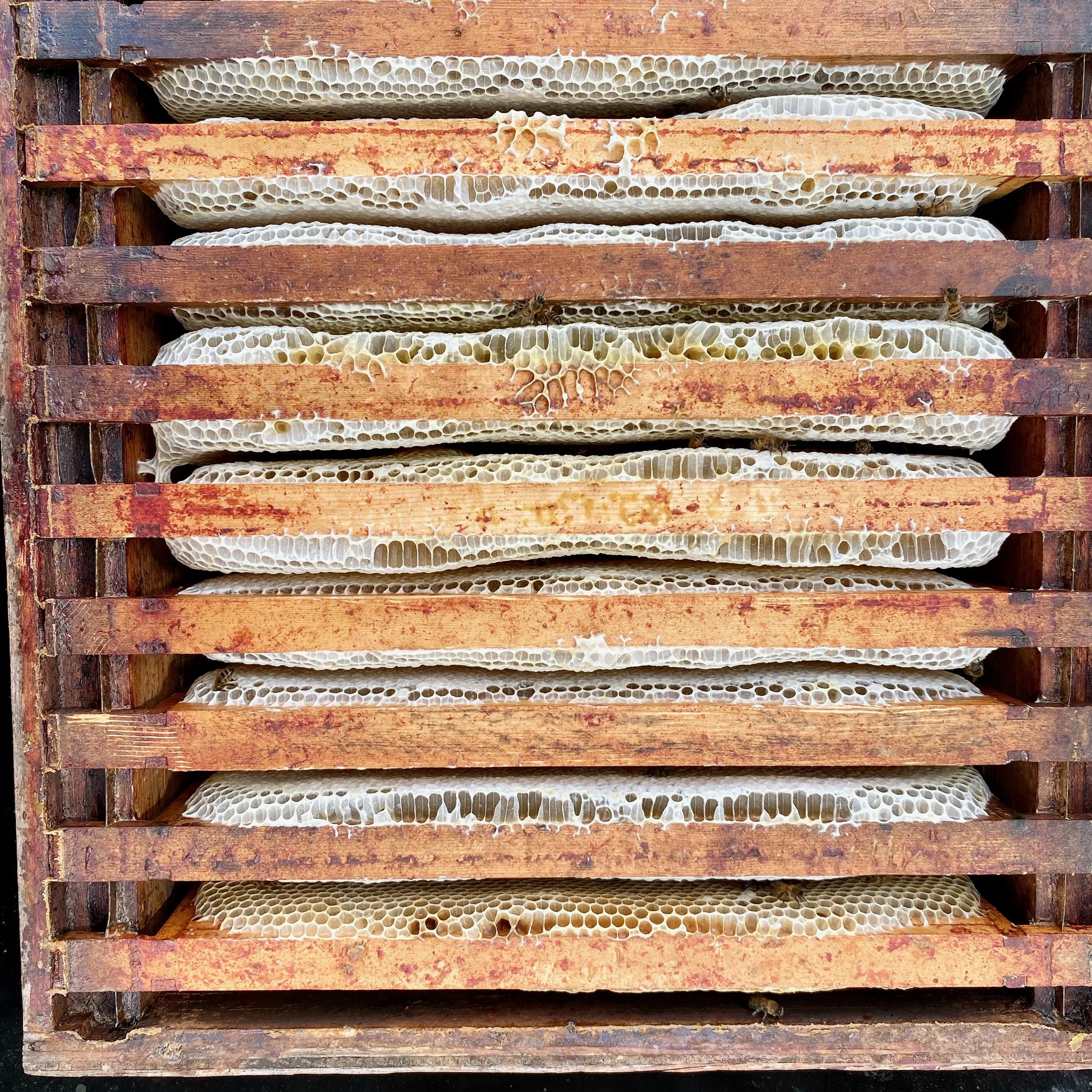
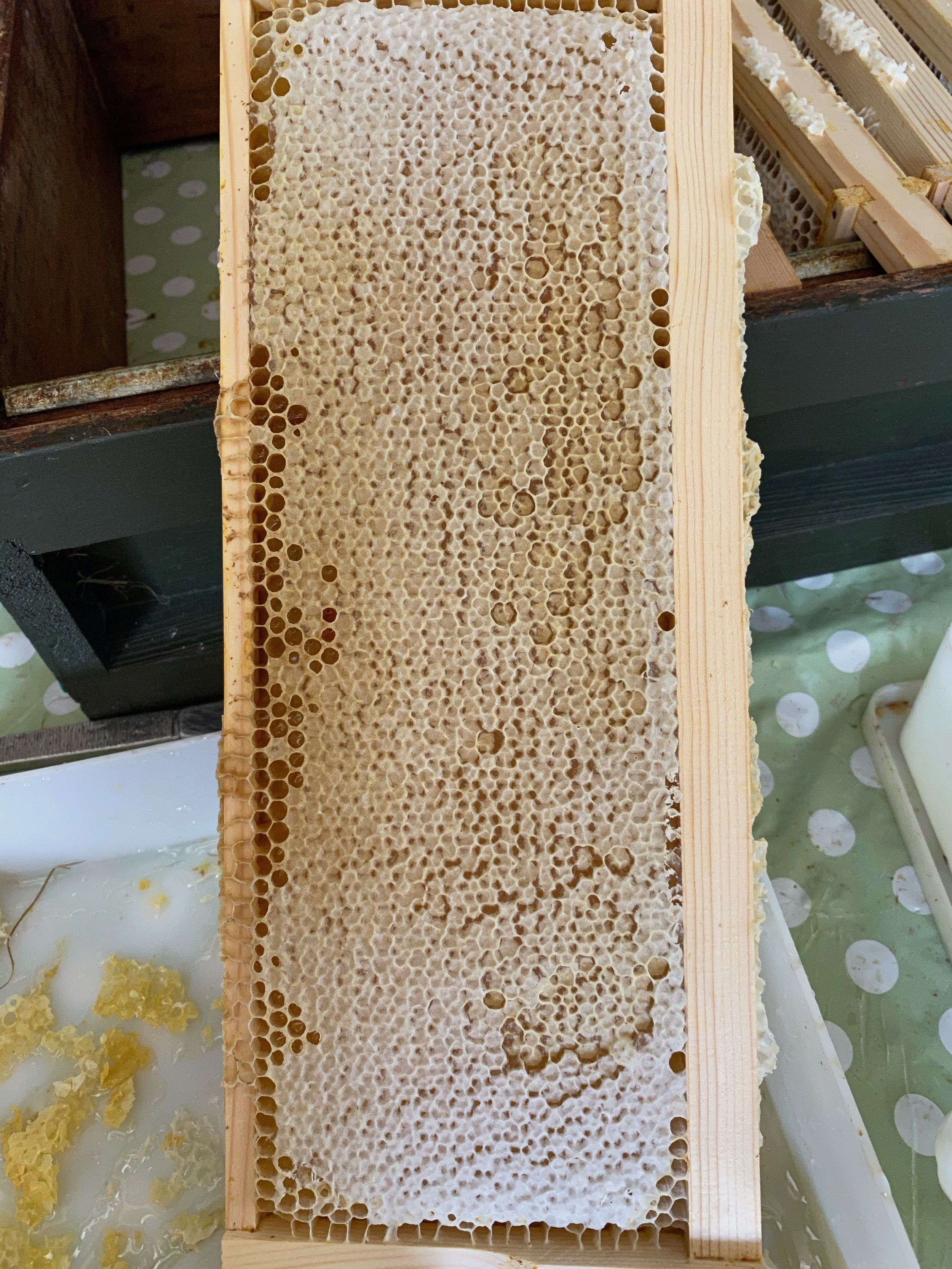
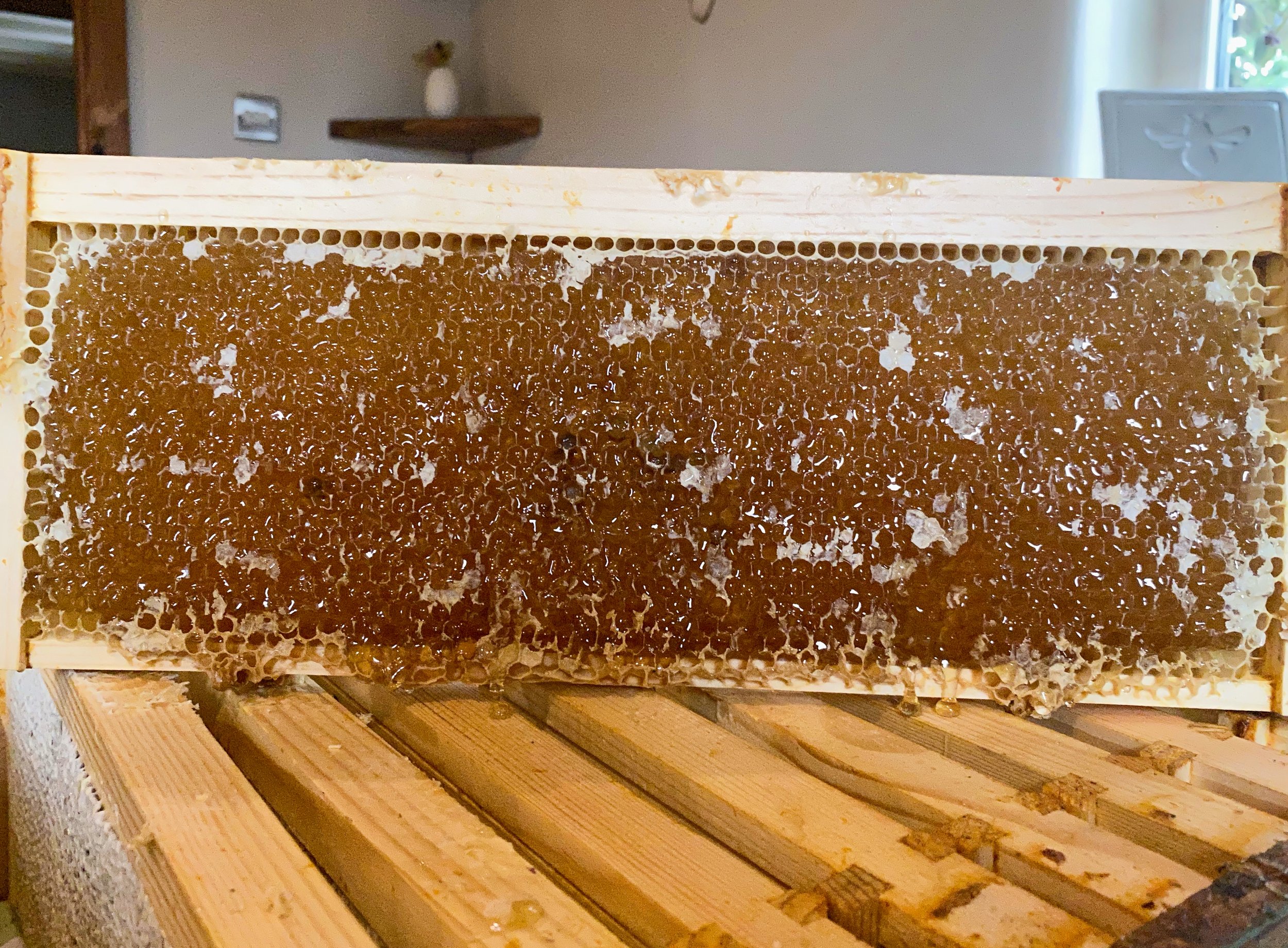
Before anyone panics, we are not feeding you sugar syrup in your honey jars!
The syrup is fed to the bees in the brood box to ensure they don't starve during a temporary shortage of nectar.
Personally, I prefer to leave my bees with some of their own honey if I can. They've worked incredibly hard for it and deserve to enjoy the fruits of their labour.
That said, I'm a hobby beekeeper with a handful of hives, not a commercial beekeeper managing hundreds. The important thing is that the bees are healthy and well fed.
LESSONS FROM THE BEES
What I find fascinating is that honeybees don't panic when times are lean.
When nectar is abundant, they gather and store what they need. When food becomes scarce, they draw on those reserves until the next flow begins.
The June Gap is a perfectly normal part of the beekeeping year. Spring flowers have finished, summer forage hasn't quite arrived, and for a few weeks the bees simply make do with what they have.
Life can be a bit like that too.
There are times when everything seems to be blooming and times when things feel a little slower. Not because anything is wrong, but because we're between one flowering and the next.
The bees know that the brambles will bloom, the clover will flower and better days are coming.
They simply get on with being bees, making the best use of what they have until nature provides once more.
And, more often than not, they're right.
Clever bees…